Why the order of the work matters
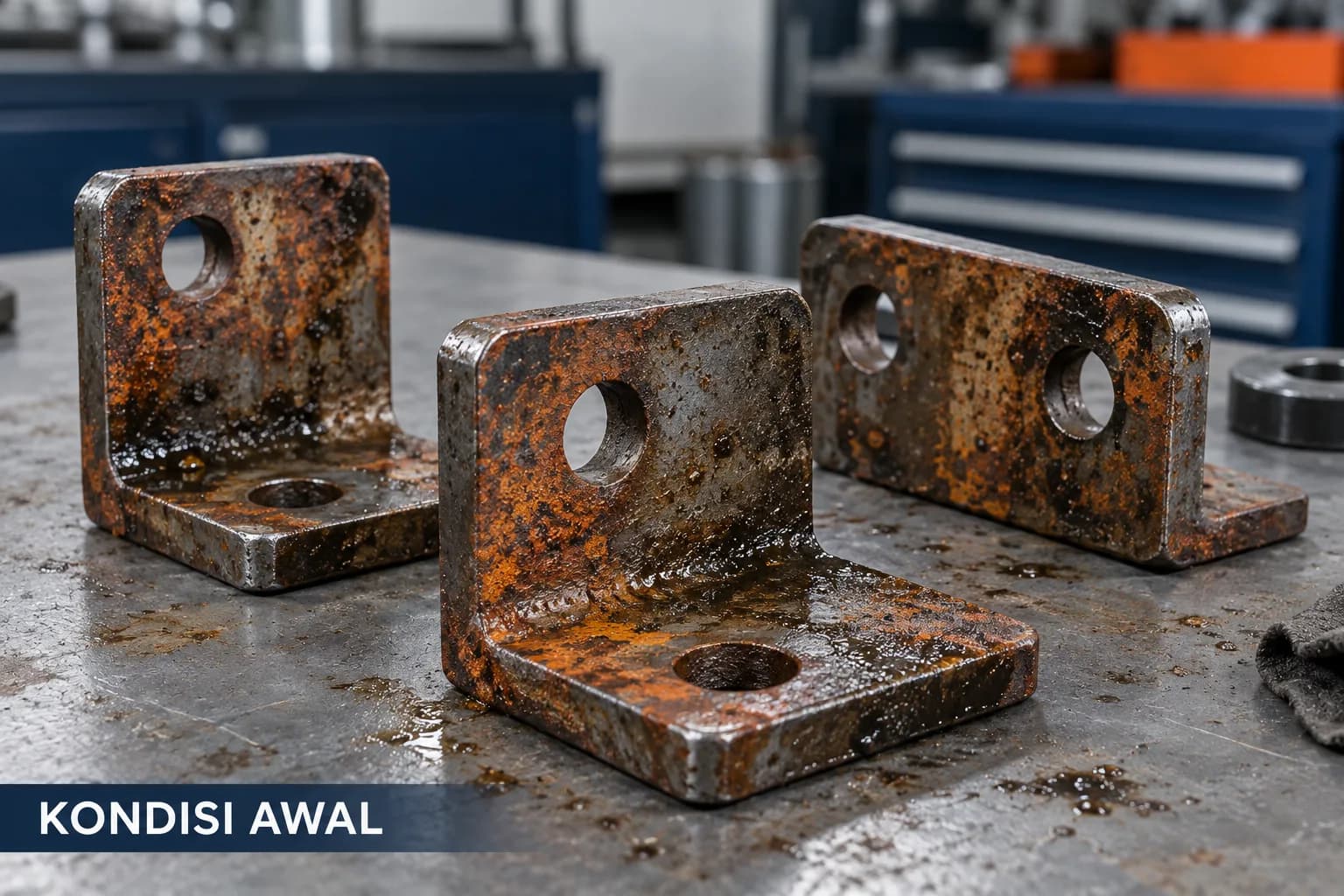
Removing rust from metal requires the right sequence of work. A surface that looks rusty is often also covered in oil, grease, and dirt. If those contaminants are not cleaned off first, rust remover has difficulty reaching the whole surface evenly.
Once the rust is gone, the job is not finished. Iron or steel that has just been cleaned needs protection straight away so it does not start rusting again.
We therefore recommend three main stages: clean the oil with Hexachem Water-Based Degreaser, remove the rust with Hexachem Rust Remover, then protect the surface with Hexachem Water-Based Rust Preventive.
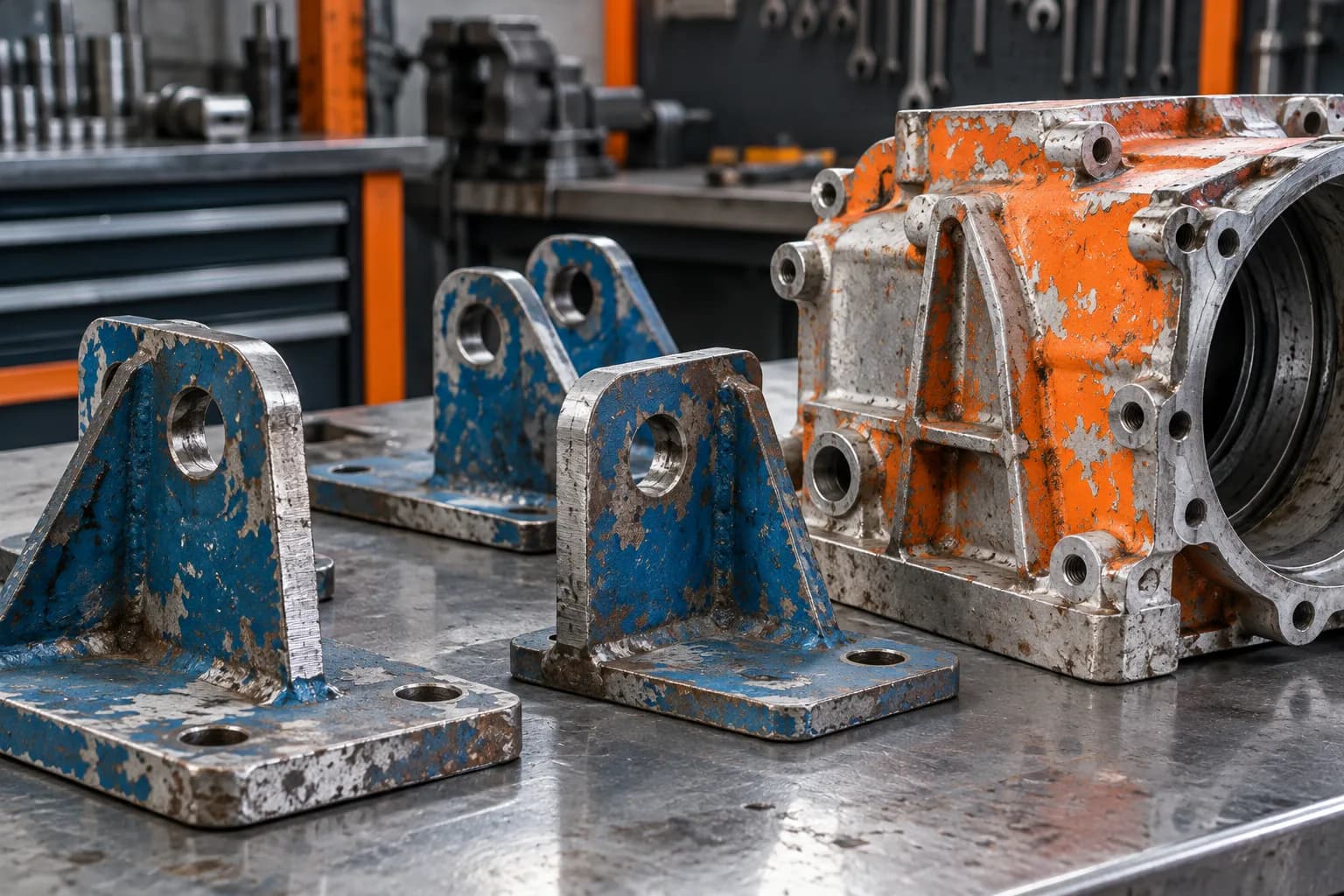
The guide below focuses on iron and carbon steel items such as machine components, spare parts, tools, and fabrication material.
1. Inspect the item before you start cleaning
The first step is to identify the material, the type of dirt, and the extent of the corrosion damage.
Look at whether the rust is only thin staining, has formed scale, or has already caused holes and thinning. Also check for oil, grease, and paint, and for sensitive parts such as seals, rubber, plastic, and electrical components.
For assembled components, remove the parts that must not come into contact with the cleaning liquid. Do not immerse a closed assembly if the liquid can get in but is hard to get out or to dry.
Test a small area before cleaning the whole surface. Aluminium, galvanised steel, stainless steel, and plated metal need a different method of their own; do not apply the same process directly.
Rust removal does not restore metal thickness that has already been lost. A component that is thinned, holed, or damaged in a load-bearing area still has to be assessed for fitness. High-strength bolts, springs, and hardened steel also need specific assessment before undergoing an acid cleaning process.
2. Remove heavy dirt and loose scale
Reduce heavy contaminants by hand before using any chemistry.
Scrape off grease deposits with a tool that will not damage the surface, wipe away excess oil, and discard dust or adhering sludge. Brush or mechanically remove brittle rust flakes.
This stage helps the cleaning liquid work more evenly and reduces how much dirt ends up in the solution.
Avoid over-scrubbing threads, sealing faces, and precision surfaces. The aim is to lift dirt and loose scale, not to abrade the base metal.
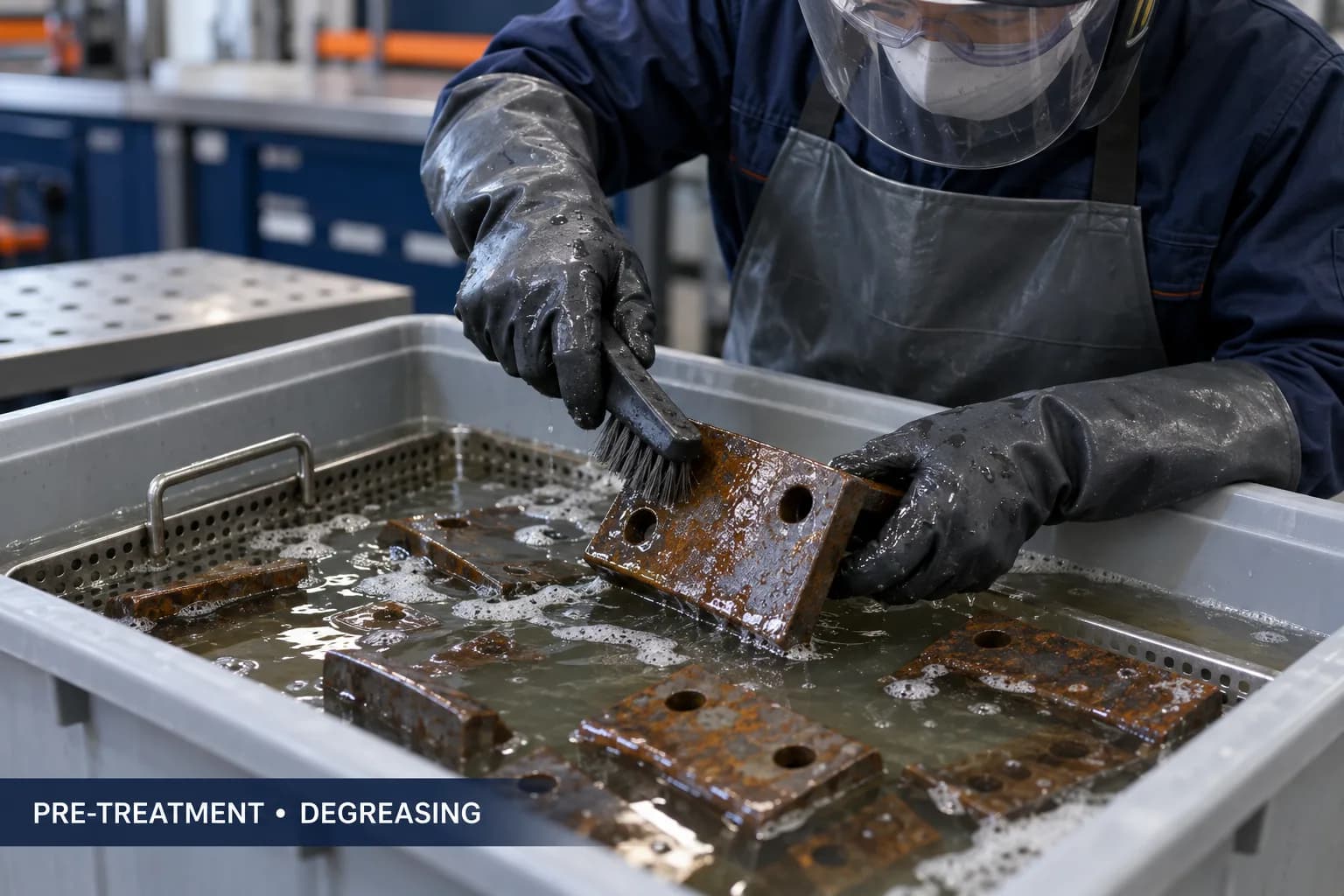
3. Clean oil and grease with Hexachem Water-Based Degreaser
Oil and rust need different treatment, which is why we place the degreasing process as a pre-treatment before rust removal.
Hexachem Water-Based Degreaser is used to clean the oil, grease, and oily dirt covering the surface. Choose the application method based on the size, shape, and number of components.
| Method | When to use it |
|---|---|
| Spray | Large surfaces or large components that are hard to fit into a tank. |
| Brush and apply | Specific areas with dirt that needs scrubbing assistance. |
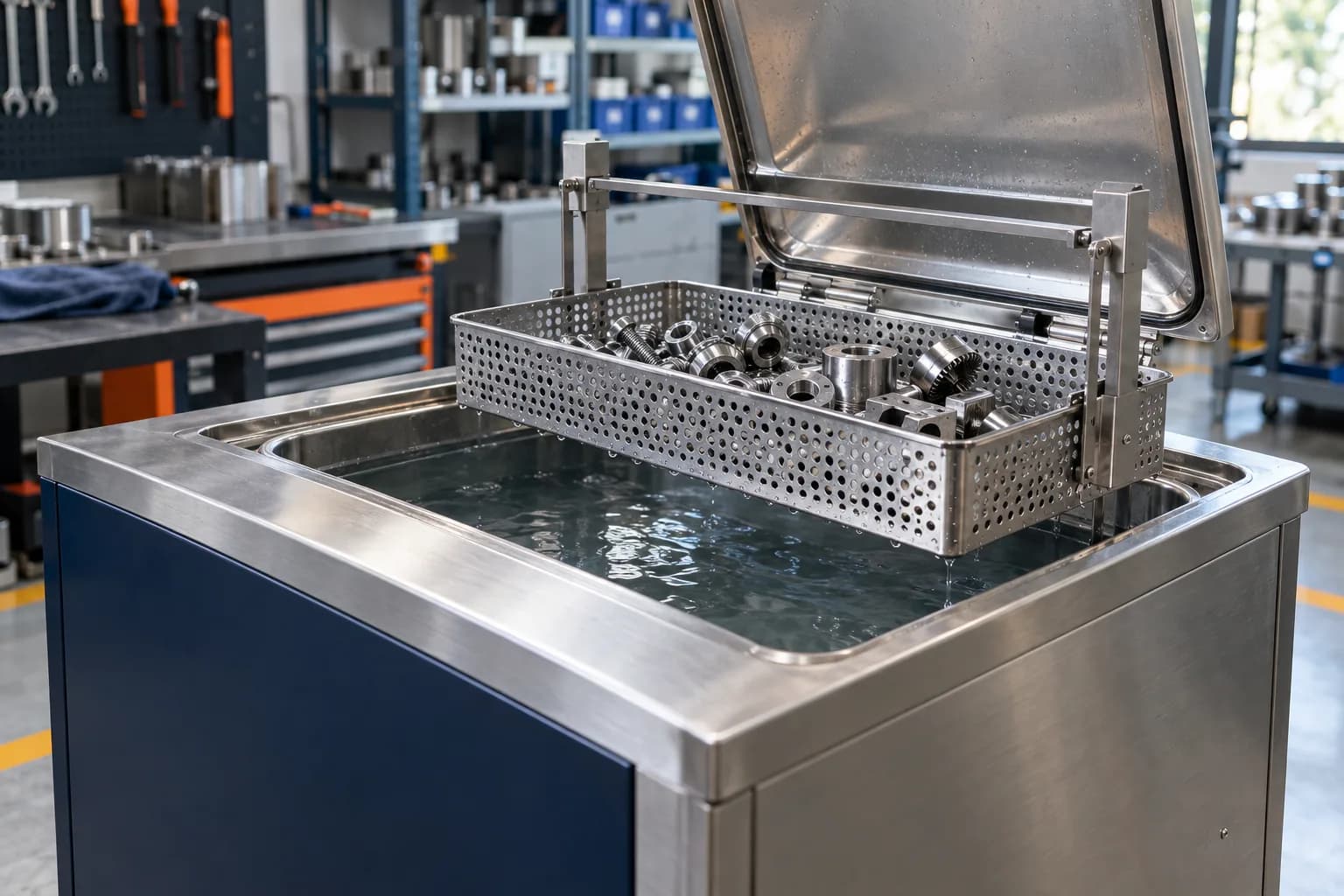
| Immersion | Removable parts, small components, or several parts processed in one batch. |
For spray or brush application:
Apply Water-Based Degreaser evenly over the oily areas.
Allow a contact time so the dirt softens and detaches.
Assist with a brush on areas with grease, corners, or gaps.
Do not let the solution dry on the surface.
Rinse until the released oil and cleaner residue are removed.
Repeat if an oily film remains.
For immersion:
Prepare a tank that is clean and compatible with the cleaning solution.
Submerge the parts until every area that needs cleaning is under the liquid.
Position the parts so they are not tightly stacked and air is not trapped inside cavities.
Move the parts gently or use suitable circulation to help the solution reach the surface.
Lift and brush areas that still hold dirt if needed.
Once the oil is gone, drain over the tank before moving the parts to the rinse stage.
Monitor the soak bath. If oil accumulates on the surface or cleaning performance drops, clean or replace the solution so dirt does not re-adhere to the parts.
Concentration and contact time need to be matched to the level of contamination. For heavy grease, start with manual removal and assess the cleaning result in stages.
4. Rinse and confirm the surface is oil-free
After degreasing, rinse with clean water. Direct the rinse water into corners, threads, holes, and gaps that can hold residual liquid.
Do not put parts that still carry degreaser straight into Rust Remover. Residual cleaner and oil can contaminate the next solution and disturb process consistency.
Check the result by looking for:
No visible film of oil or clumps of grease.
No oily dirt transferring to a clean cloth when the surface is wiped.
Water wets the surface relatively evenly after a thorough rinse.
Water that keeps beading up in beads on particular areas can indicate remaining contamination. Use this check alongside visual observation, though, because surface texture also affects wetting.
If oil is still present, repeat the degreasing before continuing.
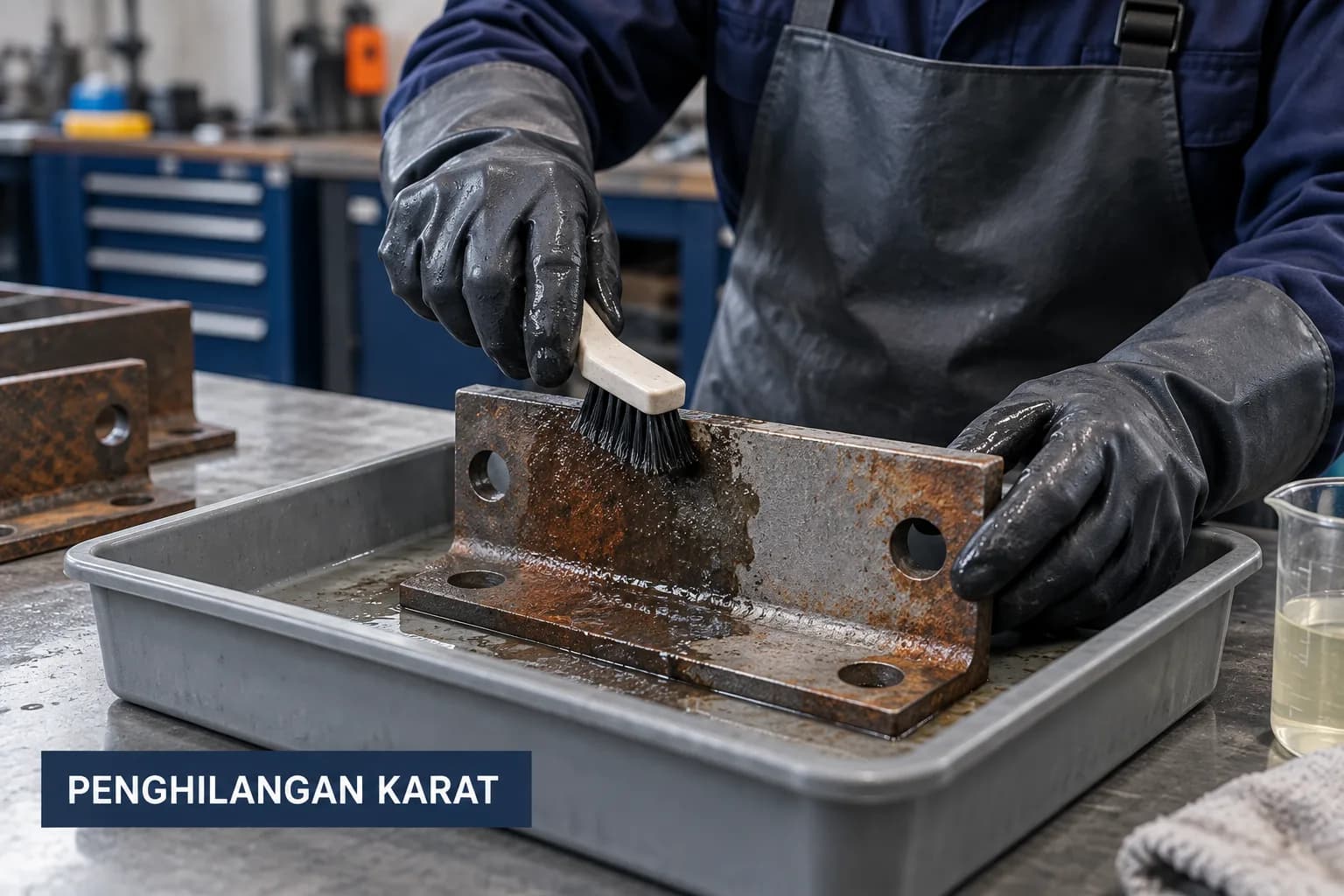
5. Remove the rust with Hexachem Rust Remover
Once the surface is free of oil and grease, continue with Hexachem Rust Remover.
For brush application, wet the rusted areas evenly and watch the change in the surface. Assist with a suitable brush to lift the softened rust, then rinse and inspect the result.
Work large areas in sections so the liquid does not dry before you have finished cleaning them.
For parts suited to immersion, use a compatible tank and make sure the solution reaches every rusted area. Avoid stacking parts in a way that blocks liquid contact. Lift and inspect periodically so the process can be stopped once the rust has gone.
Do not assume that longer immersion always produces a better surface. Excessive exposure can affect the base metal, especially on thin sections or precision components.
If rust still remains, evaluate the cause. An oil layer that was not removed, scale that is too thick, uneven liquid contact, or a solution whose performance has already declined can all give a poor result.
A clean surface does not always look shiny. Pitting marks and the texture left by corrosion can remain visible even after the rust is gone.
6. Rinse away residual liquid and reaction products
Once the rust has gone, rinse the whole surface promptly with clean water. The rinse lifts residual Rust Remover, rust particles, and reaction products.
For tank-based processes, we suggest staged rinsing:
First rinse: lifts most of the residual liquid and dirt.
Final rinse: uses cleaner water to reduce the contaminants still being carried.
Watch blind holes, threads, joints, and cavities. Reposition the parts while rinsing so the liquid can get out.
Additional neutralisation does not have to be an automatic step on every job. Where process conditions call for it, carry it out as a separate stage and follow with another rinse. Do not use Water-Based Degreaser or Water-Based Rust Preventive as a substitute for a neutralising agent.
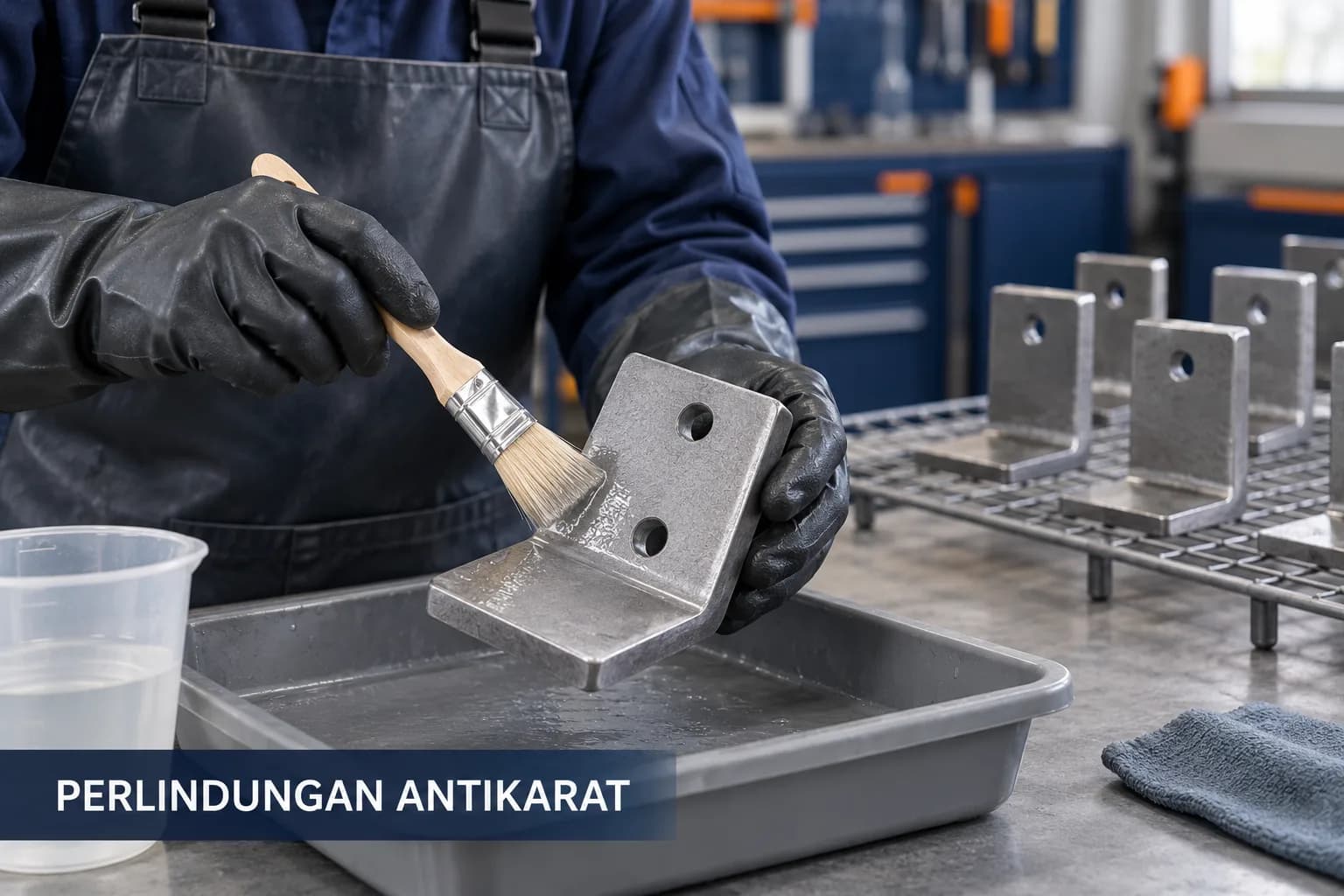
7. Protect the surface with Hexachem Water-Based Rust Preventive
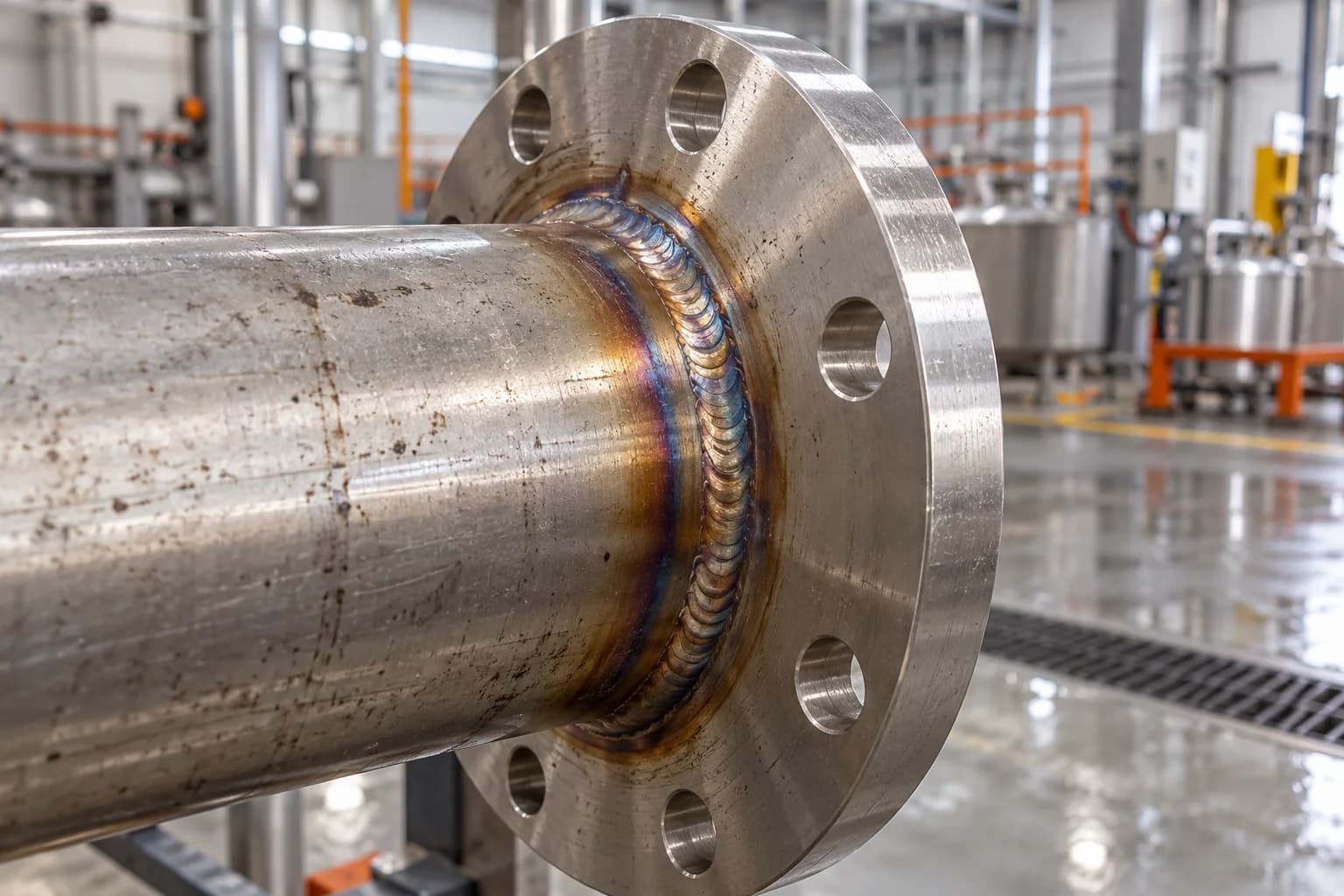
Freshly cleaned iron and steel can quickly form a light film of rust again, especially while still wet and in a humid environment. This condition is known as flash rust.
Set up the protection process from the start then. Do not wait for a whole batch to finish cleaning while the first parts sit unprotected.
Use Hexachem Water-Based Rust Preventive once the surface is free of oil, rust, and chemical residue.
The sequence is:
Drain the rinse water, including out of holes and gaps.
Make sure there is no pooling that would dilute the product uncontrollably.
For a dry-surface workflow, dry promptly using clean oil-free air or an appropriate drying method.
Apply Water-Based Rust Preventive evenly.
Drain off the excess liquid and let the surface dry.
Do not rinse again after this protection stage.
If production requires direct application to parts that are still damp, we will adjust the application conditions so that carried-in water does not reduce the effectiveness of the protection.
Water-Based Rust Preventive is used to help prevent corrosion from returning. It does not replace the function of Rust Remover and has to be applied to an already clean surface.
8. Inspect the result and store correctly
Before parts are stacked or packed, make sure the surfaces and their cavities are dry. Water trapped inside the packaging can trigger corrosion even when the outside looks clean.
Use clean gloves when handling the parts. Store them in a dry place, protected from rain, condensation, chemical splashes, and salt contamination.
How long the protection lasts depends on the storage environment, handling, and application quality. Indoor storage needs differ from direct exposure outdoors.
For parts that will be painted, settle the route from the start. Water-Based Rust Preventive is not a paint primer. Confirm compatibility with the coating system and carry out a fresh clean if the protective residue has to be removed before coating.
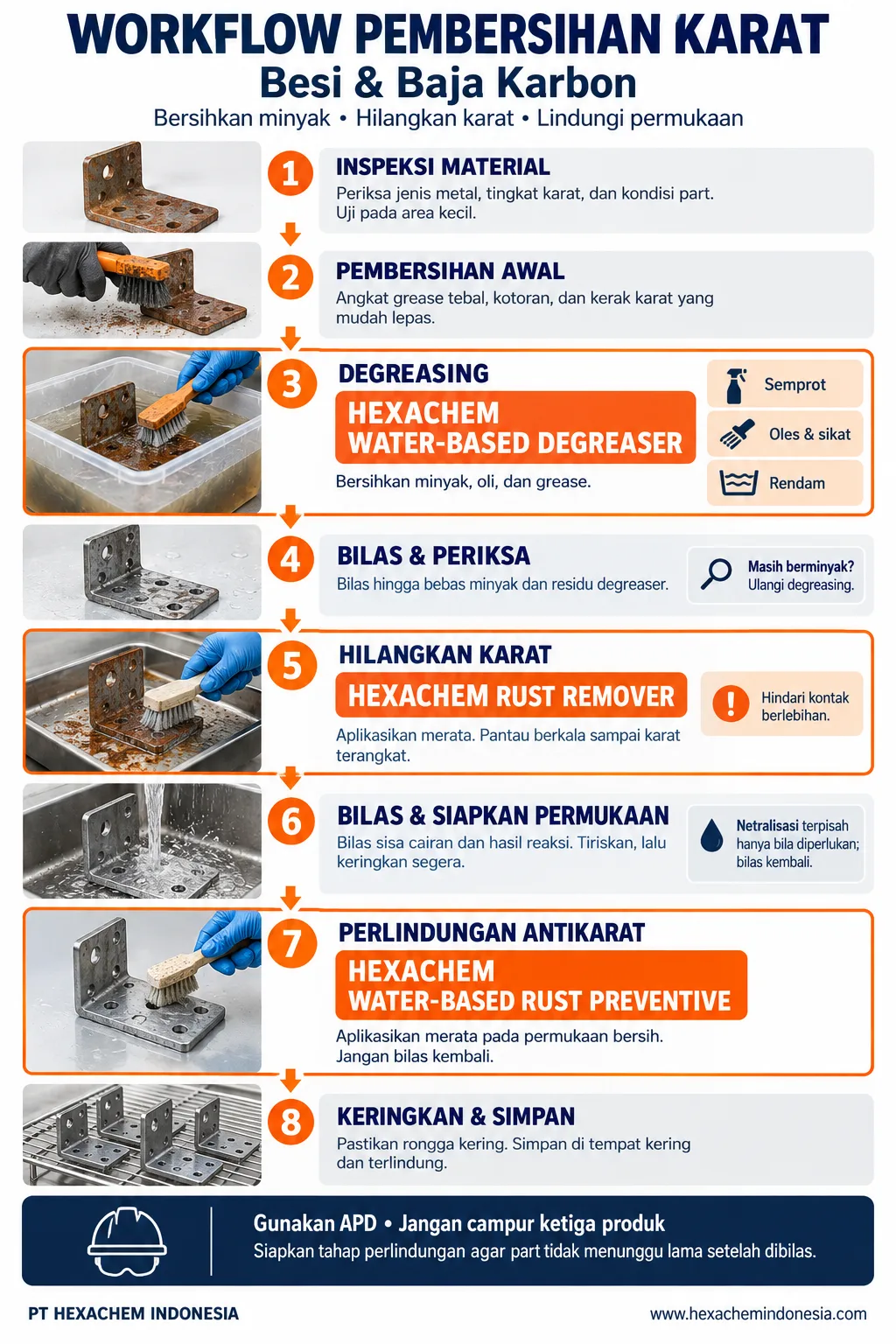
The rust removal workflow we recommend
Example: rusty, oil-covered spare parts
For a set of steel spare parts that are rusty and oily, start by wiping off the excess oil and lifting the thick grease.
Immerse the parts in Water-Based Degreaser, then assist with a brush on the areas that are still dirty. Rinse and check until the oil is gone.
Continue with Rust Remover while monitoring the change in the surface. Once the rust has gone, rinse until clean, drain, and move straight on to the protection stage with Water-Based Rust Preventive.
Finally, dry the parts and store them somewhere protected.
What to watch during the work
Use chemical-resistant gloves, eye protection, and additional protection matched to the splash risk and the product. Work in a well-ventilated area.
Keep containers and equipment separate for each stage. Do not mix the three products into a single solution. Collect spent liquid and rinse water for proper waste handling.
Hexachem solutions for metal cleaning and protection
We help customers build a cleaning process around the actual condition of their components: the metal type, the level of rust, the oil contamination, and what is needed after cleaning.
By using Hexachem Water-Based Degreaser, Hexachem Rust Remover, and Hexachem Water-Based Rust Preventive in sequence, the maintenance job becomes easier to understand and to control.
Tell us your metal, the rust level, and the contamination
Contact the PT Hexachem Indonesia team through www.hexachemindonesia.com to work out the cleaning and protection method that suits your needs. Product and service information is available at www.hexachemindonesia.com.