How paint stripping works
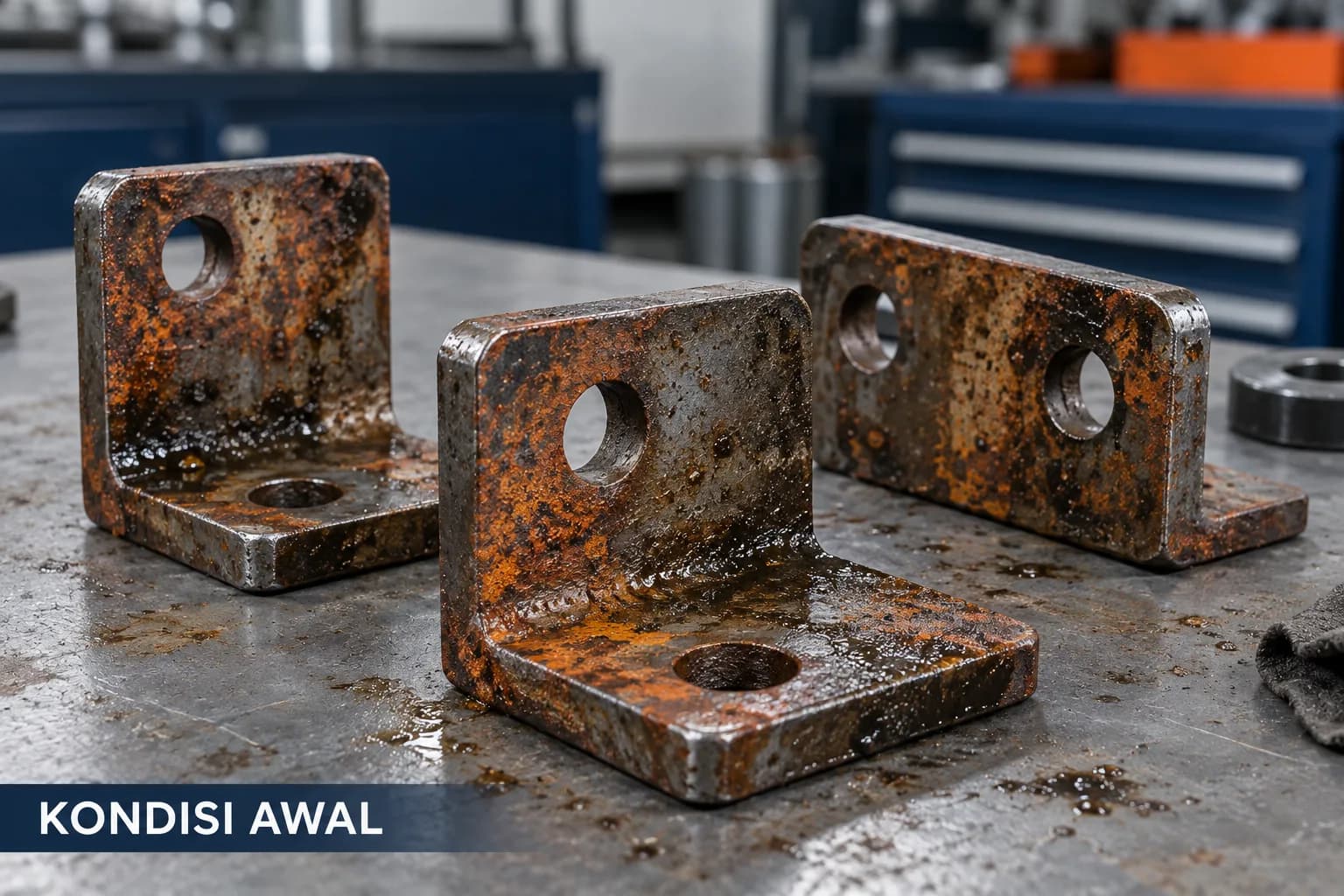
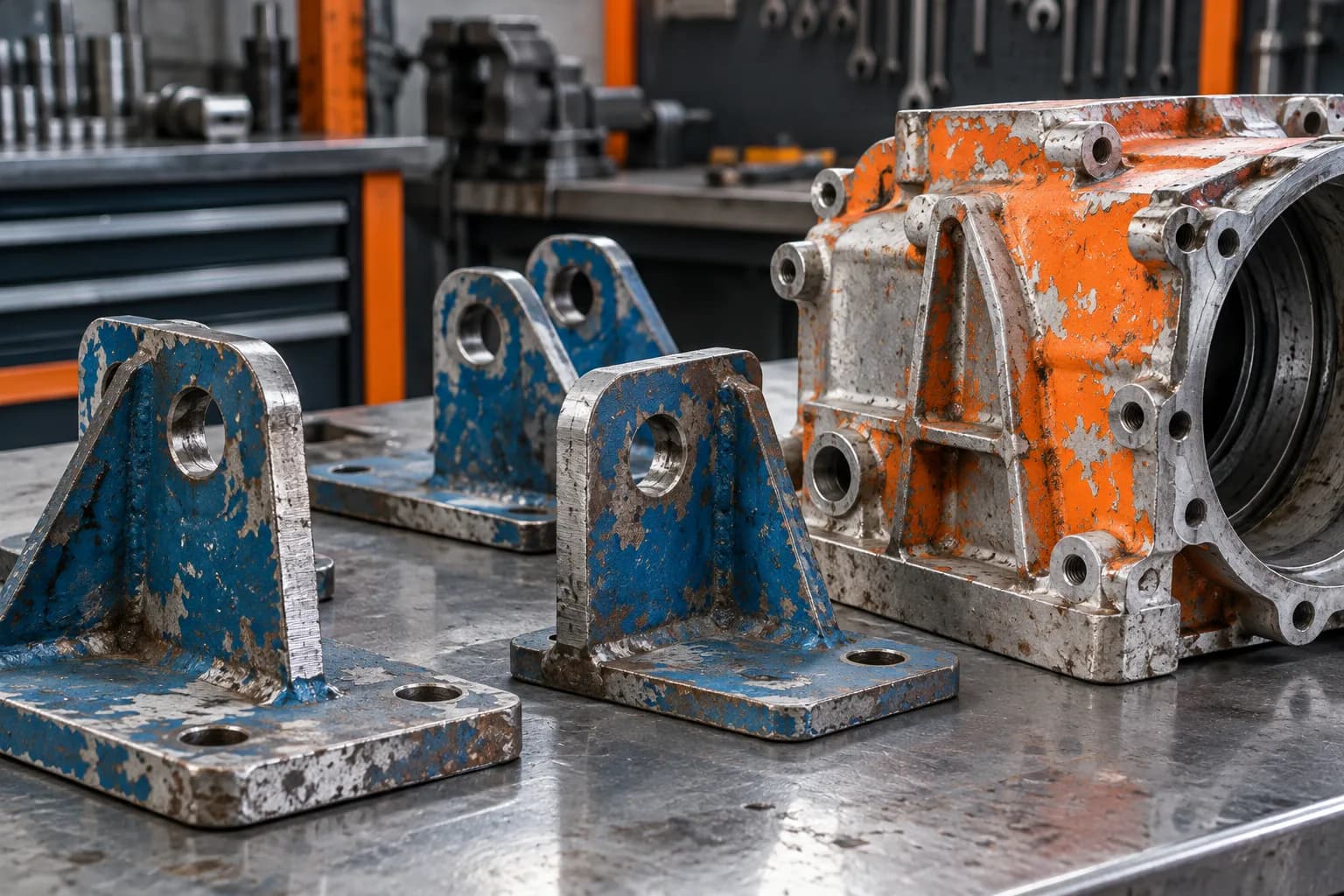
Paint that is peeling, excessively thick, or below the required finishing standard often has to be removed before a component can be processed again. In rework and component maintenance, paint stripping reopens the metal surface so its condition can be inspected and prepared for the next stage.
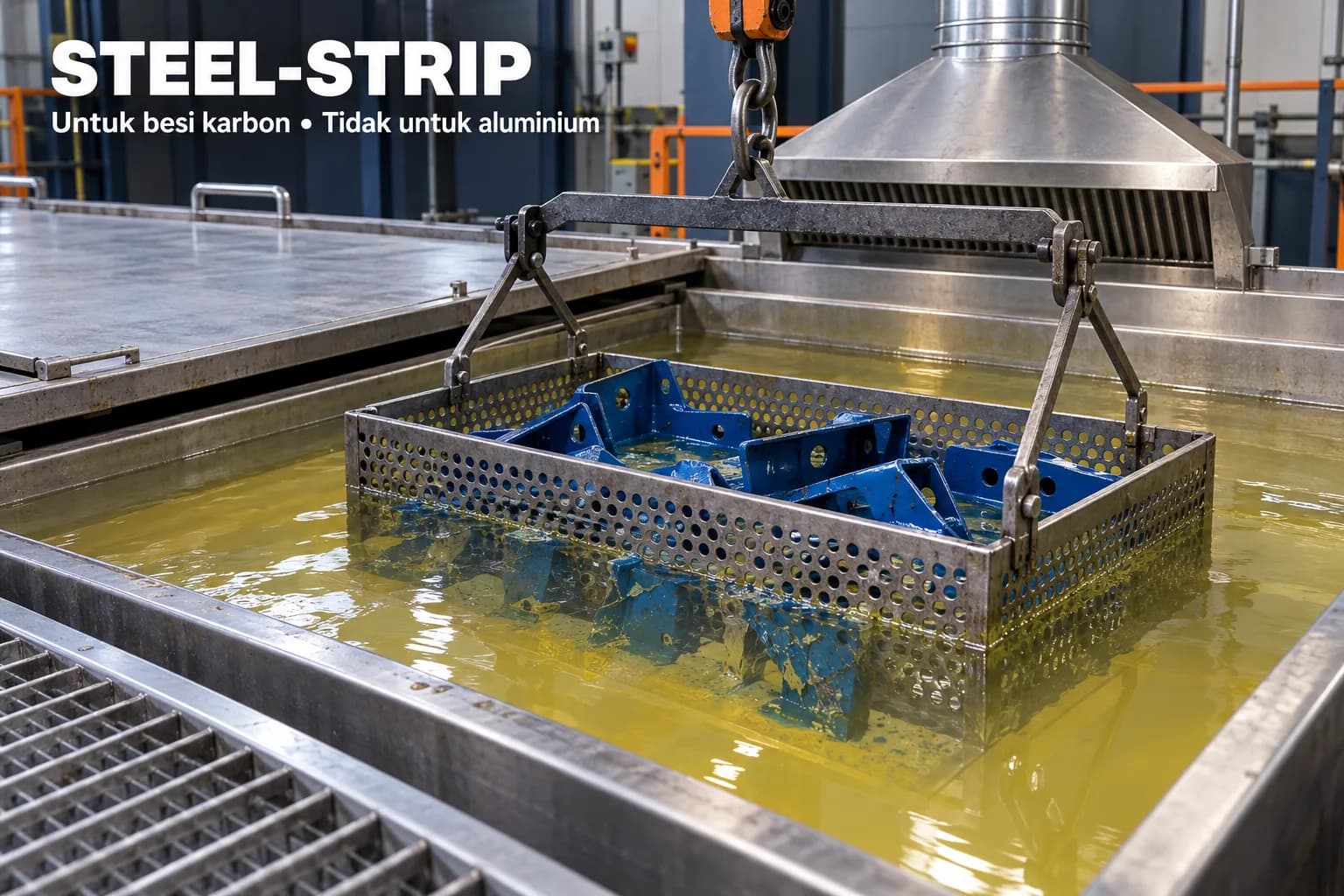
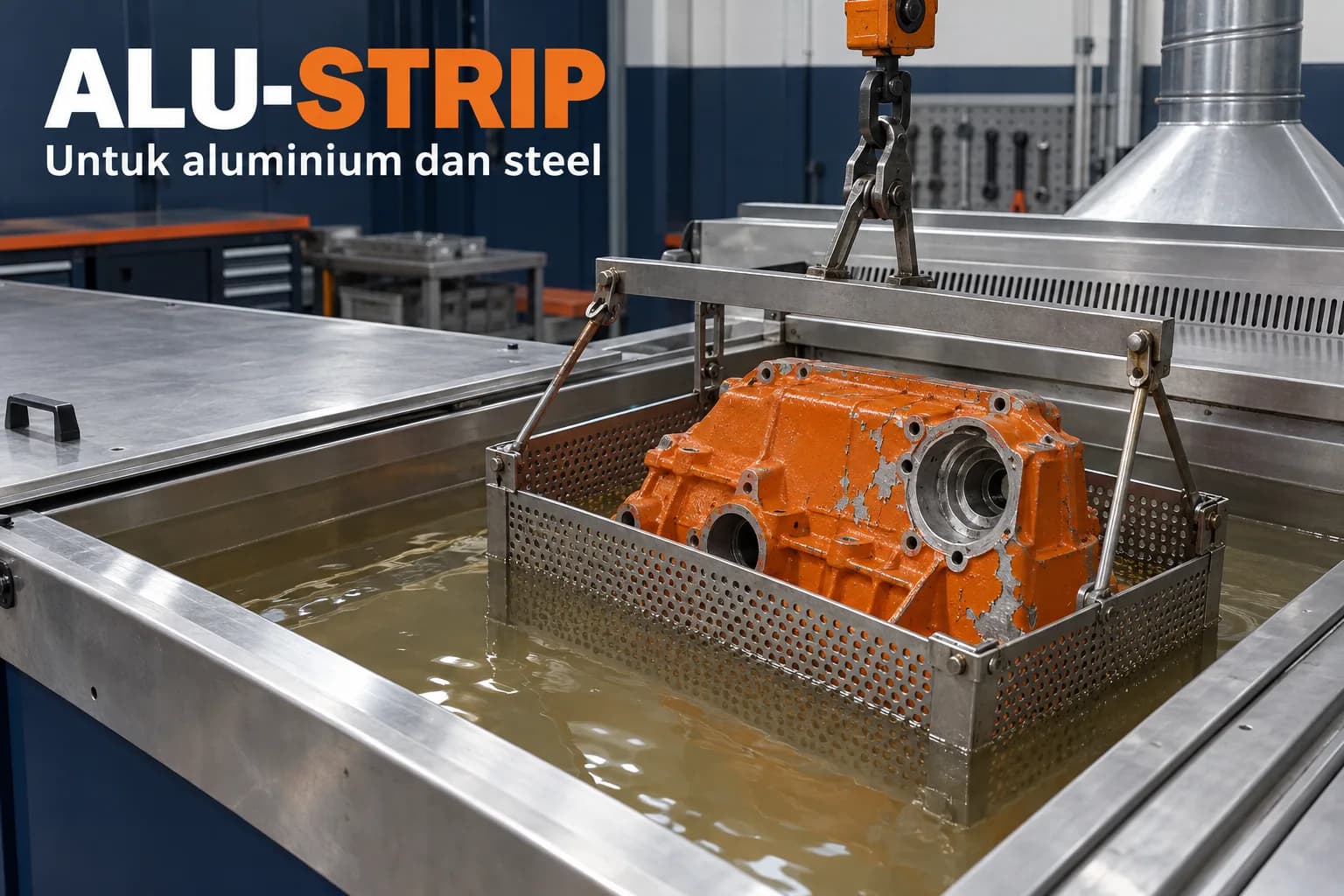
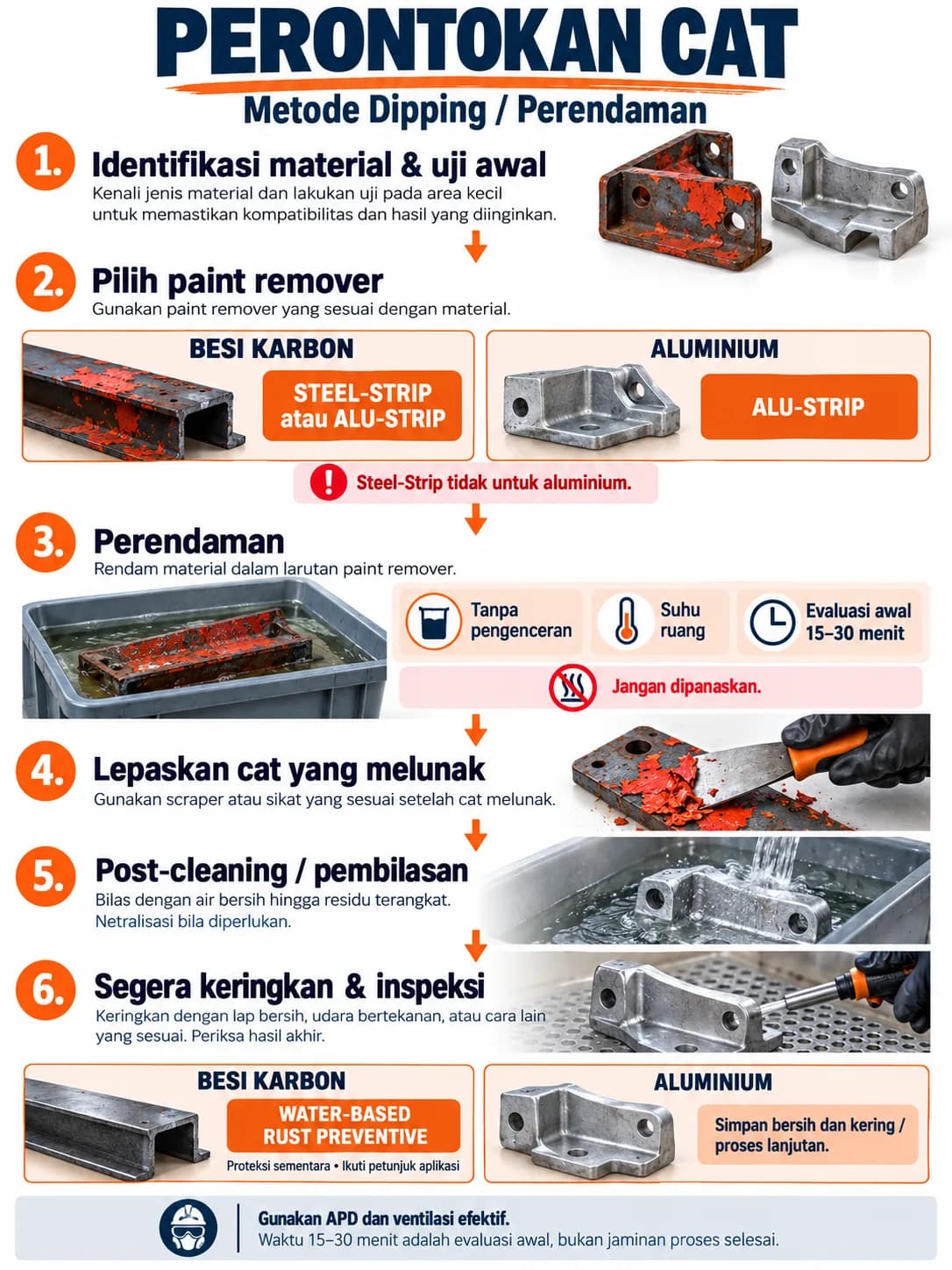
For components that can be immersed, liquid paint remover offers a dipping or soak method. Product choice has to follow the base material: Hexachem Liquid Paint Remover Steel-Strip for carbon steel, and Hexachem Liquid Paint Remover Alu-Strip for aluminium and steel. Steel-Strip must not be used on aluminium. After stripping carbon steel, Hexachem Water-Based Rust Preventive can be added as a temporary protection stage.
Both products are solvent-based strippers supplied ready to use, with no dilution. Immersion is the primary method, carried out at room temperature with an initial contact time of 15-30 minutes before the coating is assessed for softening. The products must not be heated.
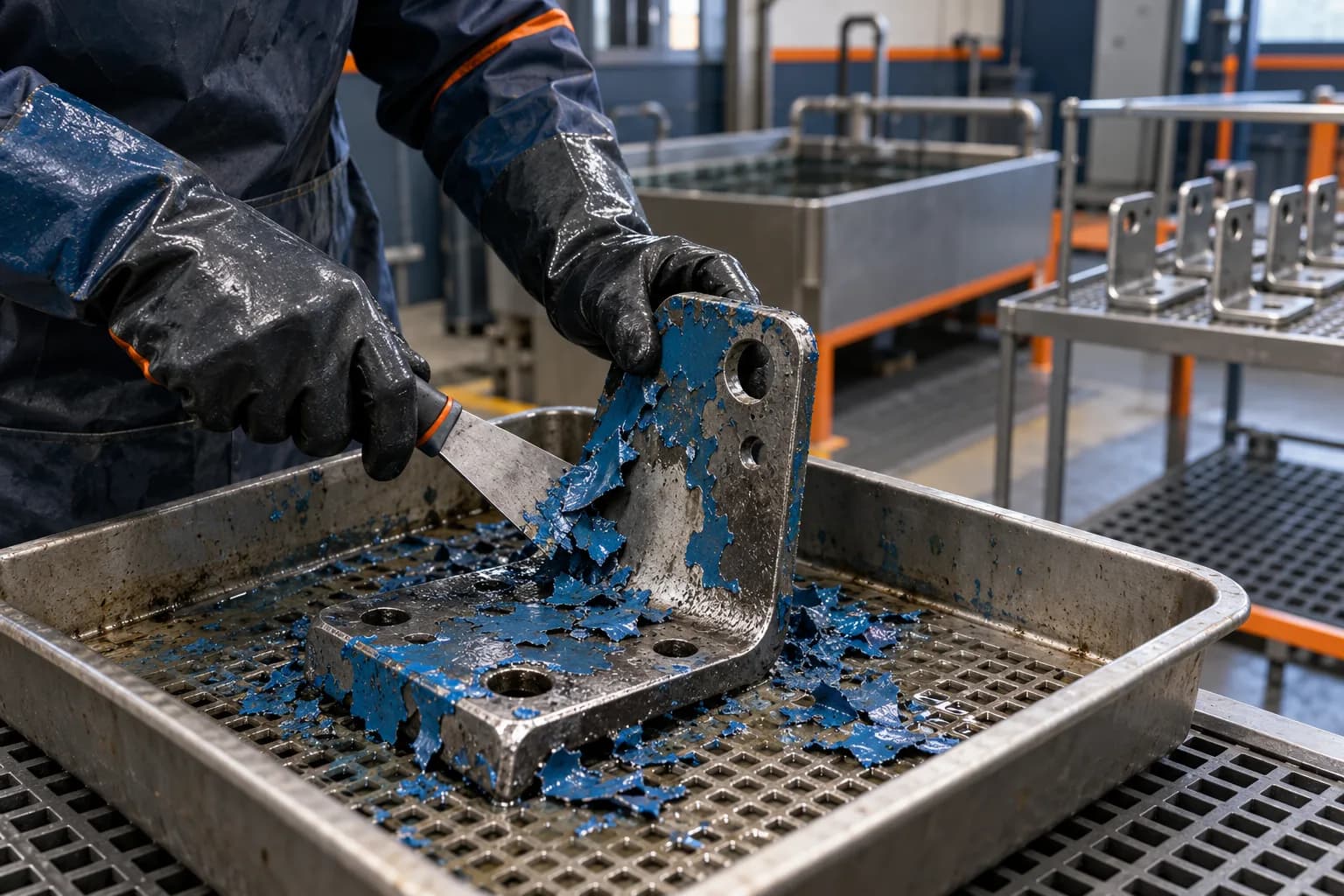
Paint remover works on the paint film so that it softens, swells, wrinkles, or lifts away from the surface. The paint does not always dissolve completely; some of it detaches as sheets, flakes, or sludge that has to be separated from the tank.
Stripping speed depends on the paint resin type, coating thickness and number of layers, cure state, component geometry, and bath condition. Success on one paint does not automatically carry the same process time over to another, so testing on a sample is necessary before production.
Both products can strip alkyd, enamel, acrylic, lacquer, certain epoxy, and other organic coatings after a preliminary test. That compatibility is not a guarantee that every type of epoxy or all coatings will release with the same result and time.
Why choose the dipping method
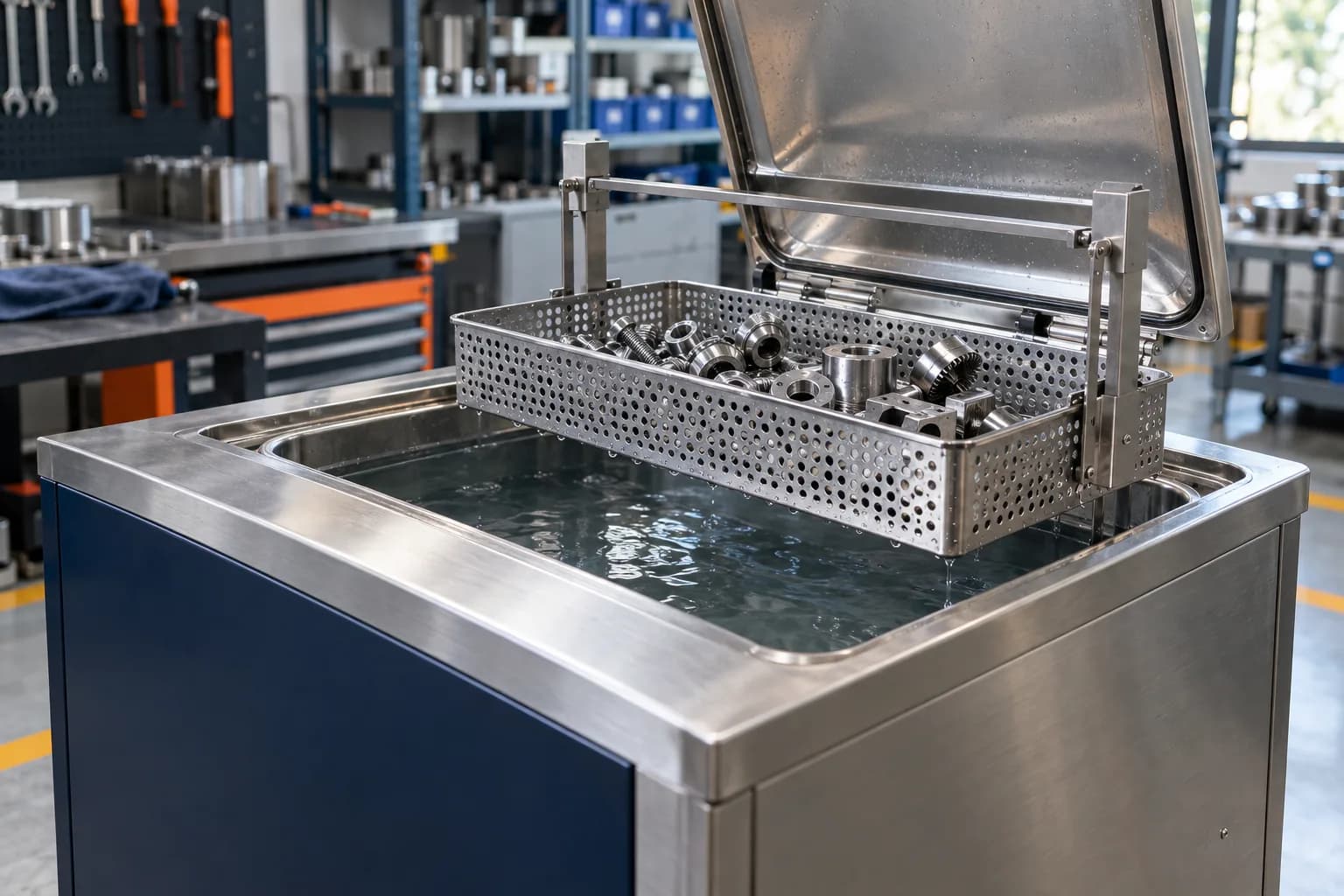
In dipping, the part of the component to be cleaned is lowered into a tank of liquid paint remover. Liquid contact with the surface makes it possible to process several components in one batch, as long as the spacing between them stays sufficient.
The method suits components with recesses or geometry that is hard to reach by hand. Liquid only works, however, on areas that are genuinely wetted. Closed cavities, air pockets, and parts sitting against each other can all produce an uneven result.
Dipping can reduce the need for aggressive mechanical abrasion. Contact time and material compatibility still have to be controlled, though, so the base metal does not suffer chemical attack.
Two products, matched to the base material
| Aspect | Steel-Strip | Alu-Strip |
|---|---|---|
| Product name | Hexachem Liquid Paint Remover Steel-Strip | Hexachem Liquid Paint Remover Alu-Strip |
| Target material | Carbon steel; not for aluminium | Aluminium and steel |
| Primary method | Dipping / immersion | Dipping / immersion |
| Dosage | Use directly, no dilution | Use directly, no dilution |
| Application temperature | Room temperature; do not heat | Room temperature; do not heat |
| Initial contact time | 15-30 minutes, then assess softening | 15-30 minutes, then assess softening |
| Typical colour | Clear to pale yellow | Clear to light brown |
| Specific gravity | 1.22-1.25 g/mL at 25 C | 1.20-1.23 g/mL at 25 C |
| Candidate applications, after testing | Brackets, plates, housings, and carbon steel fabricated parts | Housings, profiles, and aluminium or steel parts |
| Material check | Confirm it is not galvanised, plated, or an untested mixed-metal assembly | Identify the alloy, surface condition, and any anodising or other coating |
| Finishing after cleaning | Water-Based Rust Preventive for temporary protection, if required | Follow the material: aluminium drying and process steps; Water-Based Rust Preventive may be added for carbon steel |
Alu-Strip can be used for aluminium and steel, whereas Steel-Strip cannot be used for aluminium. For carbon steel either type can be chosen based on process needs and trial results; for aluminium use Alu-Strip. Fixing the product from the material is the starting point only, and fit with a specific component and paint film still has to be proven by trial.
Steel-Strip must not be used on aluminium. Magnesium, zinc, galvanised steel, brass, copper, and other non-ferrous materials are not recommended for Steel-Strip without specific validation. Alu-Strip can be used for aluminium, validated aluminium alloys, and steel; that capability does not automatically extend to all non-ferrous metals. Coupon testing is important on hardened and precision steel, and on cast aluminium, precision aluminium, anodised aluminium, and tight-tolerance surfaces. Anodising or conversion coatings can be affected.
Components with rubber, plastic, seals, adhesives, or other metal inserts need to be assessed separately. Alu-Strip being suitable for aluminium does not mean every alloy, anodising layer, or accessory is automatically compatible at every immersion time.
Paint stripping process steps
Identify the material and coating condition
Confirm the base material, the paint type if known, the number of coats, and the condition of the component. Look for rust, damage, or special coatings that have to be preserved. Remove incompatible accessories before immersion.
For carbon steel, use Steel-Strip or Alu-Strip according to need and trial results. For aluminium, use Alu-Strip and never Steel-Strip. For unidentified material or mixed assemblies, evaluate before putting them into a production tank.
Run a trial and set the working parameters
Use a sample that represents production conditions. Note when the paint starts to soften, how easily it releases, the final cleanliness, and any change in the base metal. If the surface shows etching, pitting, or unacceptable change, stop the trial and evaluate the process.
Use both products directly, undiluted, at room temperature. Start with a 15-30 minute contact time, then assess coating softening. That figure is when to start assessing, not a guaranteed total stripping time. For thick or multilayer paint, continue in stages with periodic inspection and avoid unvalidated contact times.
Do not heat the products. Do not mix them with strong alkali, strong oxidisers, bleach, or other chemicals.
Prepare the components and the tank
Remove loose dirt and excess oil or grease. If pre-cleaning is needed, use a compatible cleaner, then rinse and condition the components to procedure before they go into the paint remover. Avoid carrying water or cleaning chemicals into the stripping tank.
Use tanks, baskets, hangers, seals, and handling equipment that have been confirmed compatible with the formulation. Keep Steel-Strip and Alu-Strip tanks separate and label them clearly. Provide spill containment, tank covers, and effective local exhaust ventilation. For Steel-Strip, use a steel tank or a closed compatible container; avoid aluminium, galvanised, zinc, and reactive materials. For Alu-Strip, use a closed container or tank whose compatibility has been validated. Product suitability for an aluminium component does not automatically make aluminium the material for the process or storage tank.
Immerse using the matching product
Lower the components slowly using a basket or hanger. Make sure all target surfaces are submerged, that parts are not touching each other, and that no air pockets are trapped.
Begin the immersion at 15-30 minutes, then check whether the coating has softened. For thick or multilayer coatings, continue in stages with periodic inspection. Do not extend the immersion without limit just because a little paint is still left. Once the coating has softened enough, lift the components and drain them in a controlled way in an area with vapour control.
Remove the softened paint
Remove the softened coating with a scraper or brush suited to the component material, without excessive scraping or grinding. Work in an area that can contain the residue. If a strong layer remains, evaluate whether another cycle is needed within the validated contact time limits.
Paint flakes have to be separated from the components and managed as process waste. Avoid cleaning methods that spread uncontrolled splashes or aerosols of the chemical.
Clean the residue and inspect the surface
Rinse or post-clean according to the production procedure, then neutralise if required. The rinse medium, the neutralising agent, and the neutralisation dose all have to be defined in a validated production procedure. Both products have limited water solubility and can form two phases, so residue removal must be checked rather than assumed complete after a water contact.
If neutralisation is genuinely required, carry it out as a separate stage with a validated procedure. Do not add neutraliser straight into the paint remover tank. Make sure no residue is left in holes, joints, or gaps.
Dry the components promptly after post-cleaning and neutralisation where required: on carbon steel to prevent flash rust, and on aluminium to prevent water marks or surface oxidation. Inspect cleanliness and base metal condition before finishing. A surface that looks paint-free is not necessarily free of contaminants that will interfere with protection or with subsequent paint adhesion.
Finishing carbon steel: Water-Based Rust Preventive
Once the paint is off, carbon steel has lost the barrier that was limiting contact with the environment. Especially after a water rinse, the surface can develop early rust or flash rust while it waits for the next operation.
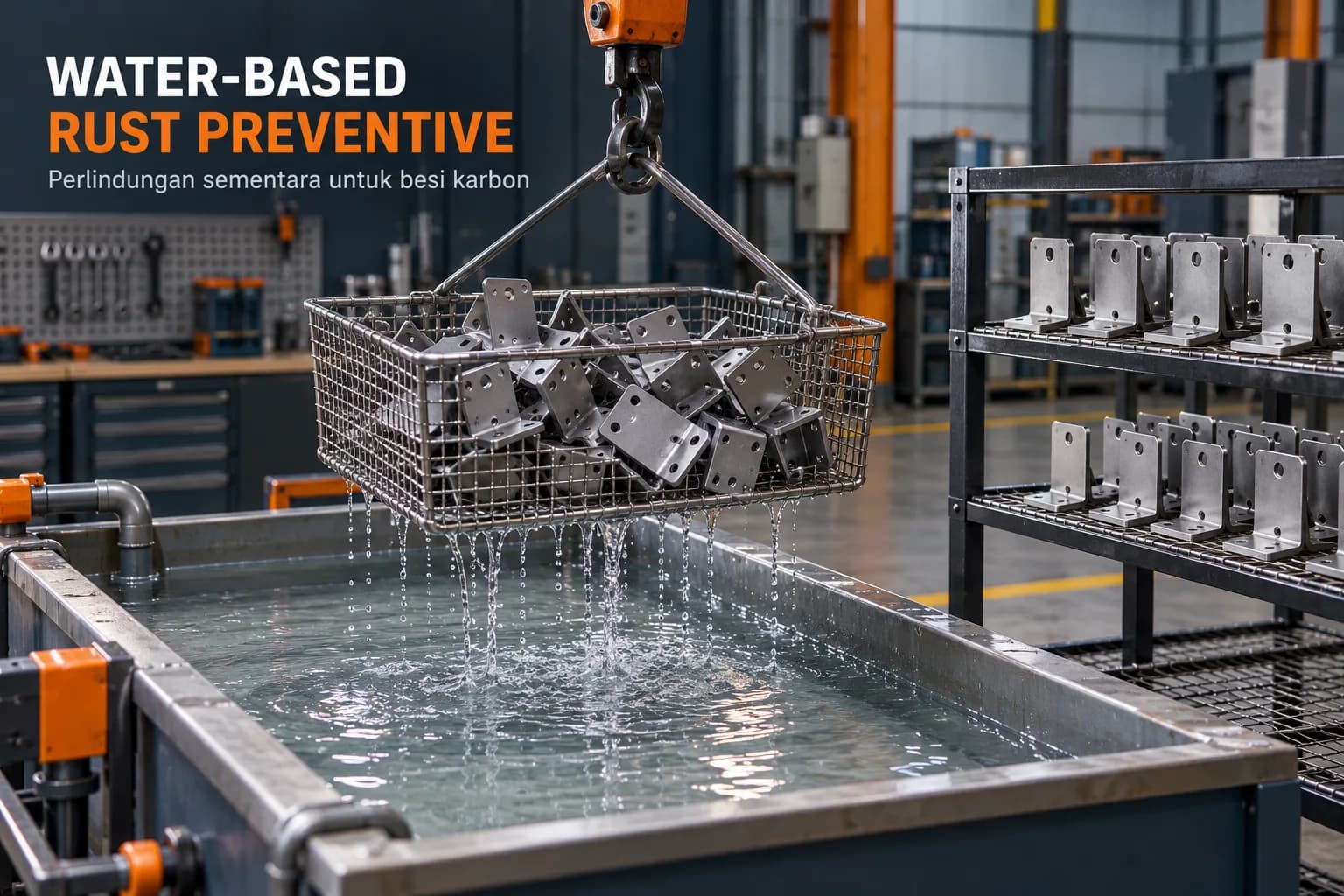
Hexachem Water-Based Rust Preventive is intended as a temporary protection stage for carbon steel after either Steel-Strip or Alu-Strip and the residue cleaning are complete. The choice of finishing follows the carbon steel itself, not merely the name of the paint remover used. This stage is relevant to components that will wait, be moved, or be stored temporarily under suitable storage conditions.
Complete the post-stripping cleaning stage first: post-cleaning or rinsing, neutralisation if required, then prompt drying. Once the component is clean and has passed inspection, add Water-Based Rust Preventive as a separate finishing stage according to the product's application instructions. For a direct transfer from the rinse into the rust preventive bath, the sequence and component entry conditions must be specifically validated so that contamination or a delay does not trigger flash rust.
Application method, dilution needs, contact time, draining, and drying after the rust preventive all follow that product's own instructions. The 15-30 minute figure and the undiluted use described in this article apply to the two paint removers, and do not automatically apply to the rust preventive.
Do not put components that still carry paint remover or acidic residue into the rust preventive bath. Contamination can disturb the bath condition and its performance. Concentration, contact time, drying conditions, and duration of protection have to be set from the product's application instructions and actual validation.
Water-Based Rust Preventive does not replace a primer or pretreatment before painting. If a component will be repainted, evaluate compatibility with the inhibitor residue and carry out whatever cleaning or pretreatment the paint system requires. For components going straight to a painting line, the temporary protection stage can be aligned with the validated process flow.
Finishing aluminium after Alu-Strip: cleaning, drying, and inspection
For aluminium components after Alu-Strip, rinse or post-clean according to the production procedure, neutralise if required, then dry promptly to prevent water marks or surface oxidation. Check for remaining paint, colour change, pitting, or unwanted texture change.
Aluminium does not form the red rust that carbon steel does, but it can still corrode. In this workflow, Water-Based Rust Preventive is not part of the aluminium route. Continue with clean, dry storage or with the appropriate aluminium pretreatment if the component will be repainted.
Process workflow
If inspection finds remaining paint, evaluate a further stripping cycle before finishing. If attack on the base metal is found, stop the process and evaluate the parameters.
Keeping results consistent
Record the material and coating type, batch load, contact time, bath condition, and inspection results. Separate flakes and paint sludge with a compatible method. Do not assume that liquid which still has volume left in it necessarily still has the same stripping capability.
Avoid cross-contamination between products and rinse liquids. Product make-up, bath recovery, or liquid replacement is done on the basis of procedure and performance evaluation, not visual estimate alone.
Operator safety and waste handling
Industrial liquid paint remover requires trained operators, the current SDS, vapour control at the source, and eye, face, skin, and respiratory protection based on an exposure assessment. Keep tanks covered when not in use and never put your head over the tank surface.
Use a closed system or covered tanks and local exhaust ventilation. Select gloves from permeation data, use chemical splash goggles and a face shield, protective clothing and an apron, and respiratory protection based on a risk assessment. Provide eyewash, safety shower, and emergency response procedures. Read the SDS before use, storage, transport, and disposal.
Do not heat the product or use it near a welding arc, hot surfaces, or open flame, because toxic decomposition gases can form. Do not mix it with strong alkali, strong oxidisers, bleach, or other chemicals.
Collect spent liquid, paint sludge, and rinse water for appropriate waste management. Do not discharge process residue into drains.
Choose the process by material and finishing need
Choosing the right product helps build a controlled paint stripping process: Steel-Strip for carbon steel (not for aluminium), Alu-Strip for aluminium and steel, and Water-Based Rust Preventive as temporary protection specific to the carbon steel route after cleaning.
Send us the material, paint type, and component size
Contact PT Hexachem Indonesia with the material information, paint type, component dimensions, and your target next process to work out trial needs and a suitable application route. Product and service information is available at www.hexachemindonesia.com.