Why stainless steel still needs surface treatment
The corrosion resistance of stainless steel comes from an extremely thin, chromium-rich passive layer. That layer can re-form on a clean surface in a supporting environment. Oil, iron particles from fabrication, chemical residue, and heat oxides can all disturb the condition of that surface.
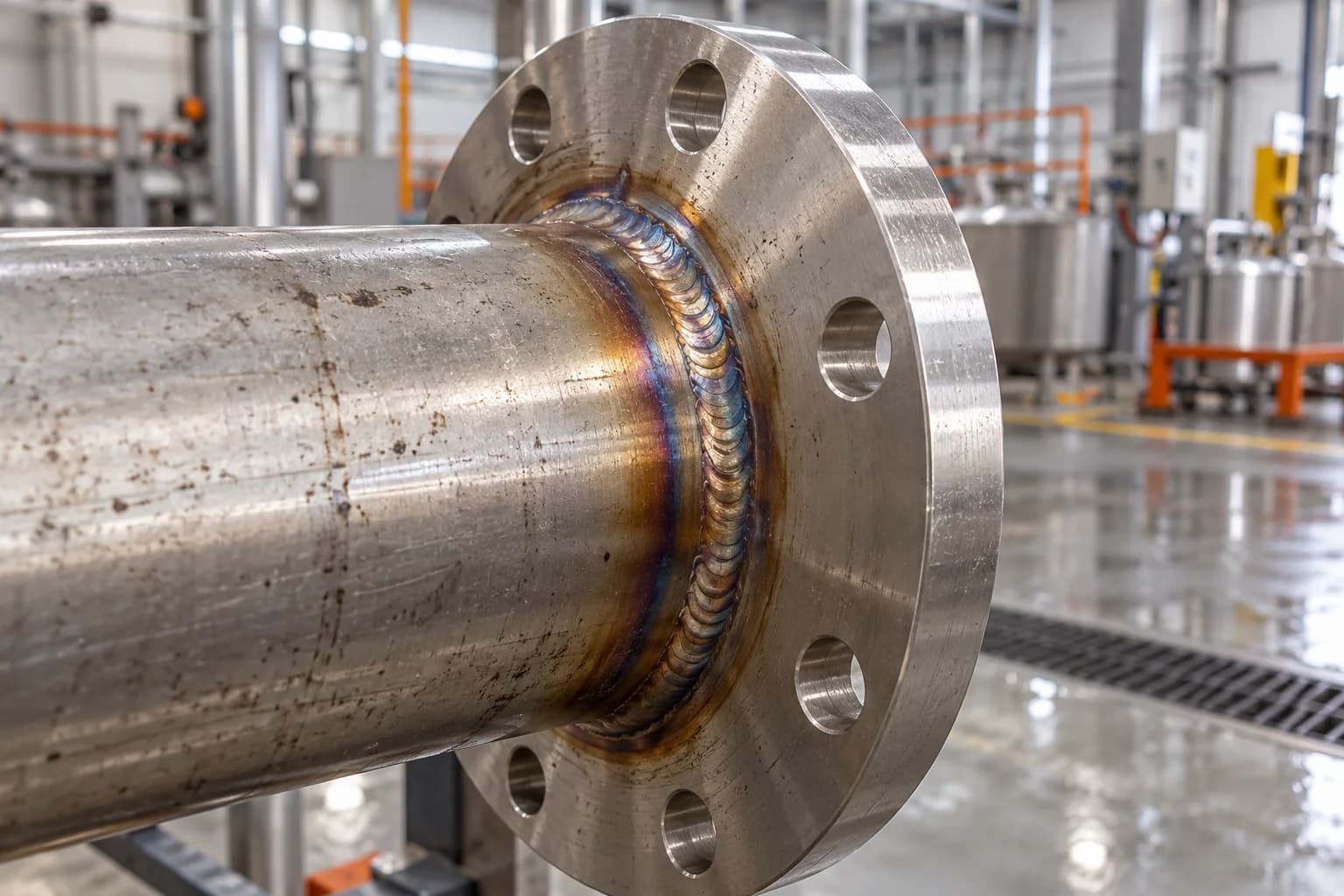
Heat tint is the colour change caused by oxide formation during heating, for example around a weld. Beneath the oxide, a metal layer can form with reduced chromium content. Suitable pickling removes the oxide along with the affected surface layer, so better stainless surface is exposed again. [1, 2]
Pickling involves dissolving part of the metal surface. The process therefore has to be controlled so it does not cause excessive etching, dimensional change, or an uneven result. The finish can end up more matte: pickling does not guarantee a mirror finish. Decorative requirements need an additional finishing step planned separately. [1]
Five Hexachem products in the treatment chain
| Product | Role and selection |
|---|---|
| Waterbased Degreaser | Pre-treatment for lifting oil and grease before the acid process. Dosage is matched to the contamination and the application test results. |
| Stainless Steel Pickling Gel | Local pickling on weld beads, stained areas, and vertical surfaces that need adhesion. |
| Stainless Steel Pickling Liquid | Pickling by brush or immersion. Spray only with suitable equipment and exposure control. |
| Neutralizer | A separate stage for dealing with residual acidity where a validated SOP calls for it. |
| Stainless Steel Passivating Agent | Follow-on treatment to help restore the passive condition and corrosion resistance as the process requires. |
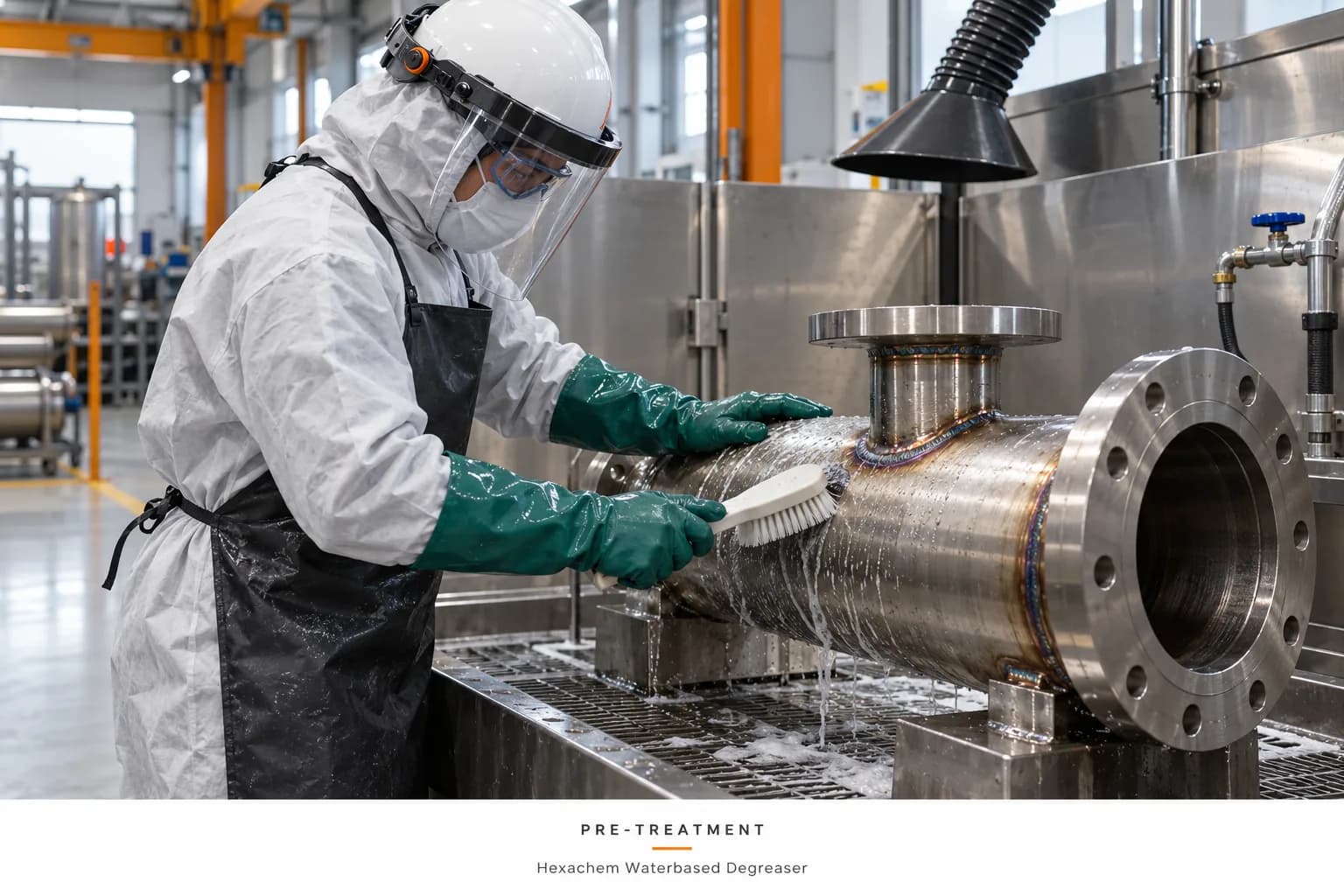
Pre-treatment before pickling
Check the stainless steel grade, the type of finish, the condition of the welds, and the contaminants that will be removed. Parameters for one grade must not be transferred to another without evaluation. We recommend verifying compatibility and testing a small area before broad application.
Also check for seals, gaskets, coatings, aluminium components, galvanised parts, and other adjacent materials. Protect or remove anything that is not compatible. Make sure the treated area can be rinsed and drained effectively; closed gaps that trap solution need particular attention. Welded areas must be cool enough and within the validated range for the application condition.
Remove dust, loose dirt, and fabrication residue before any chemical treatment. Strongly adhering weld spatter may need mechanical work first. Use clean stainless-dedicated tools suited to the finish required. Avoid carbon steel brushes or abrasives previously used on carbon steel, because they can carry iron contamination onto the surface.
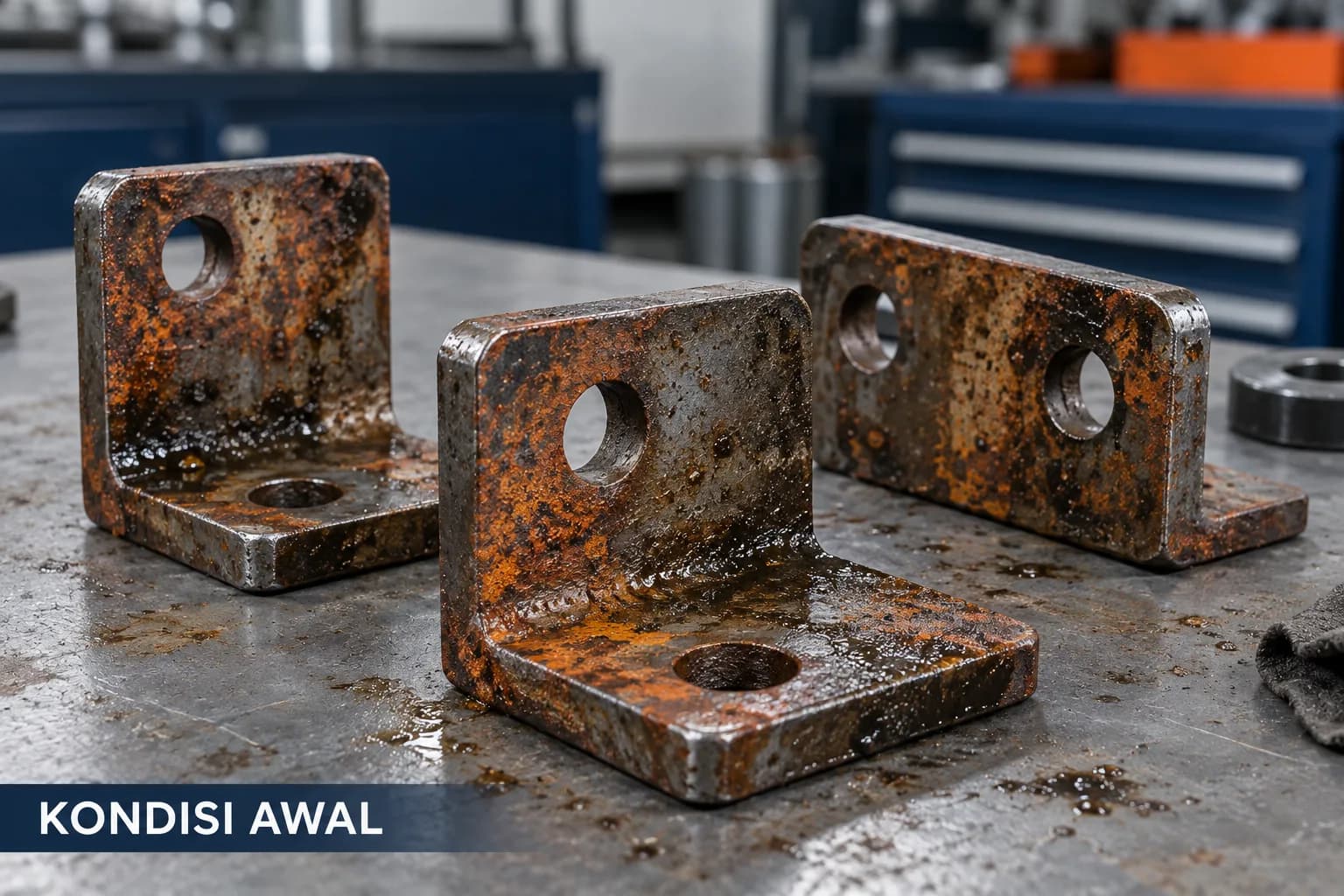
Oil, grease, and cutting oil can block wetting by the pickling solution. A surface may look clean in some areas while still carrying an oil film in others, so the reaction is uneven. Degreasing is therefore done before pickling on components that carry organic contamination. Pickling and passivation do not replace degreasing. [2, 3]
Hexachem Waterbased Degreaser serves as the supporting product for this stage. Set the concentration, contact time, application method, and compatibility from the job conditions and field test results. Adjust the dilution to the type and level of contamination being cleaned.
After degreasing, rinse until the cleaner and the dirt are gone, then drain off standing water. Do not carry alkali or surfactant residue into the pickling stage. Even water wetting can help with an initial cleanliness check, but it does not replace the full surface quality inspection.
Choosing between Pickling Gel and Pickling Liquid
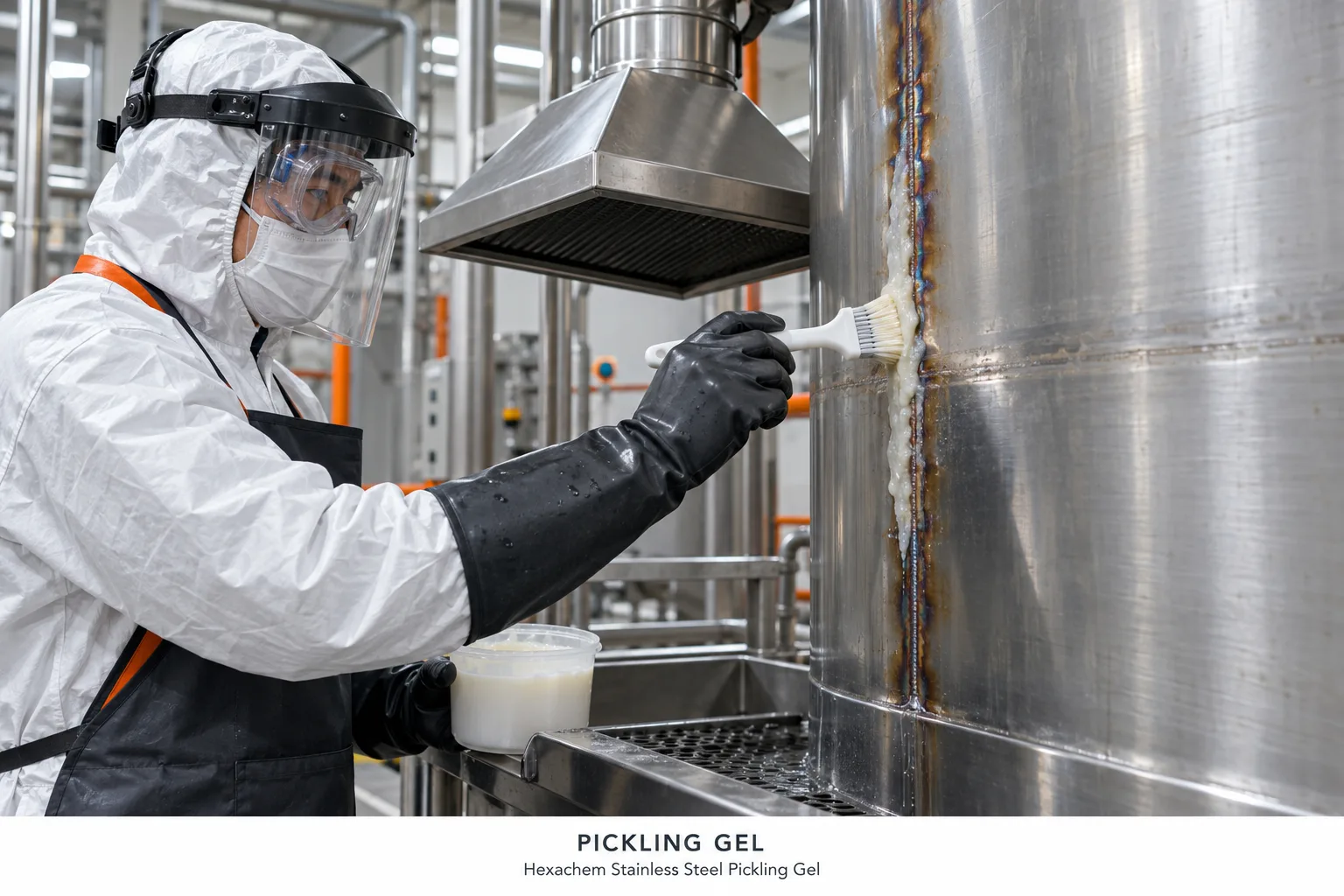
The choice of product form is driven mainly by component geometry, area to be treated, surface orientation, and how the process will be controlled. Gel suits work where the treatment has to be limited to a weld bead or a vertical area. Liquid supports brushing and immersion of components in a compatible container.
| Parameter | Pickling Gel | Pickling Liquid |
|---|---|---|
| Normal use | Ready to use, no dilution | Ready to use, no dilution |
| Typical initial time | 5-10 minutes | 5-10 minutes |
| Light staining | 2-5 minutes as the initial time | 2-5 minutes as the initial time |
| Primary method | Apply with an acid-resistant brush | Brush or immersion; spray with exposure control |
| Immersion | Local brush application is the priority | Specific time is set through testing |
| Key control | An even film that does not dry out | Even wetting and periodic inspection |
These parameters are starting points for application testing. Stainless grade, temperature, surface condition, oxide thickness, and contamination level can all change the contact time needed. A typical initial application time does not automatically become the immersion time for every component.
Applying the gel: apply the gel with an acid-resistant brush or applicator so the target area is covered evenly. Watch the surface change during the reaction and do not let the gel dry. Where needed, use a compatible non-metallic pad or brush carefully. Once the agreed level of cleaning is reached, rinse thoroughly straight away.
For heavy staining or scale, assess the result after rinsing before deciding on a repeat application. Extending contact time without inspection can raise the risk of damaging the finish. On decorative surfaces, a spot test is also needed to judge the colour or gloss difference between the pickled area and the surrounding surface.
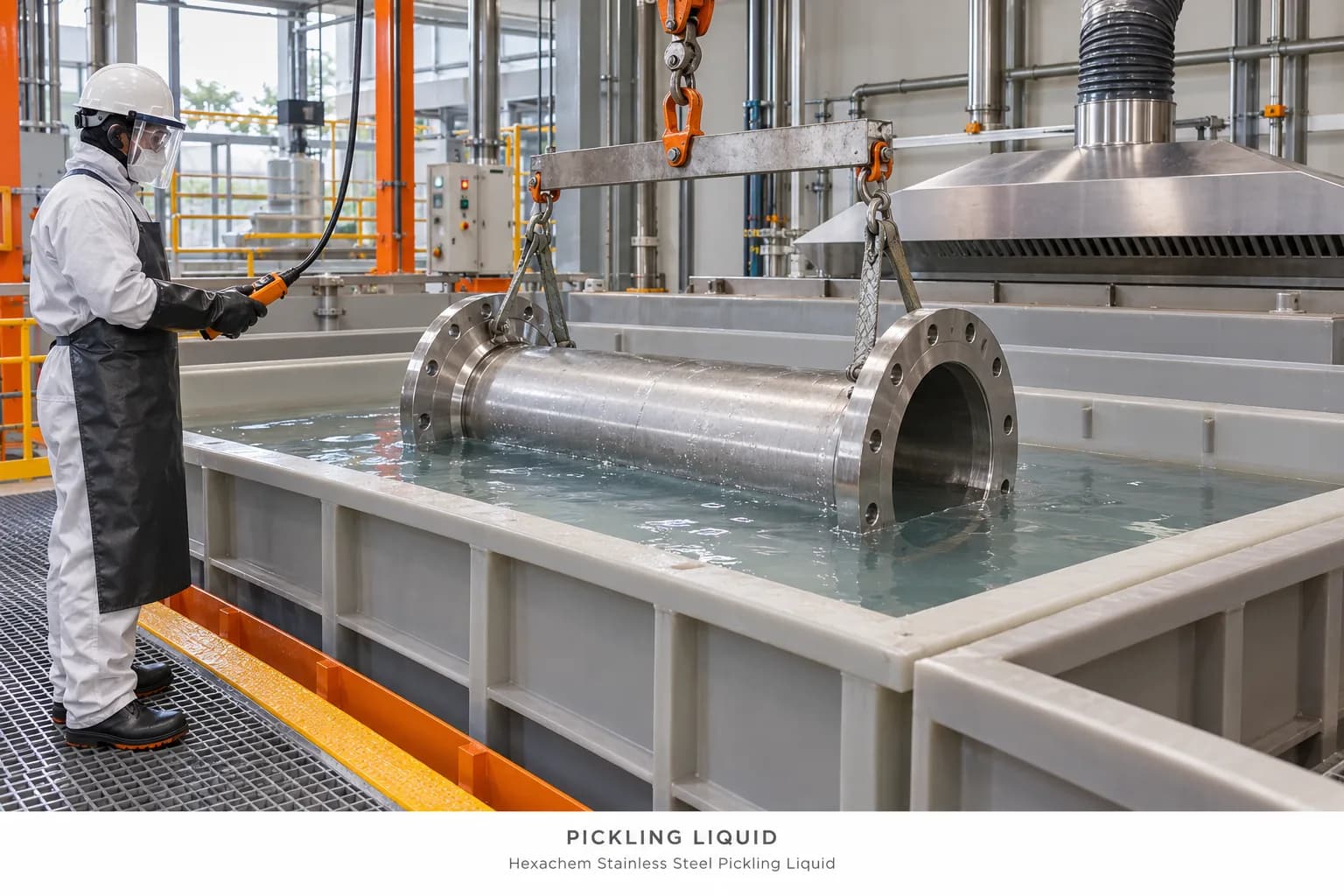
Applying the liquid: the liquid can be applied with an acid-resistant brush or by immersion. For immersion, use a compatible tank and handling tools, local ventilation, and draining arrangements so solution is not carried over excessively into the next stage. Inspect the result periodically and set the time by testing on representative components.
Low-pressure spray application with compatible equipment is also possible. That method requires chemical mist control and a suitable working area. Choosing spray has to be part of the process risk assessment, not simply a way to speed up manual application. Repeatedly used immersion solution also needs evaluating, because contamination and usage change its performance.
Rinsing after pickling
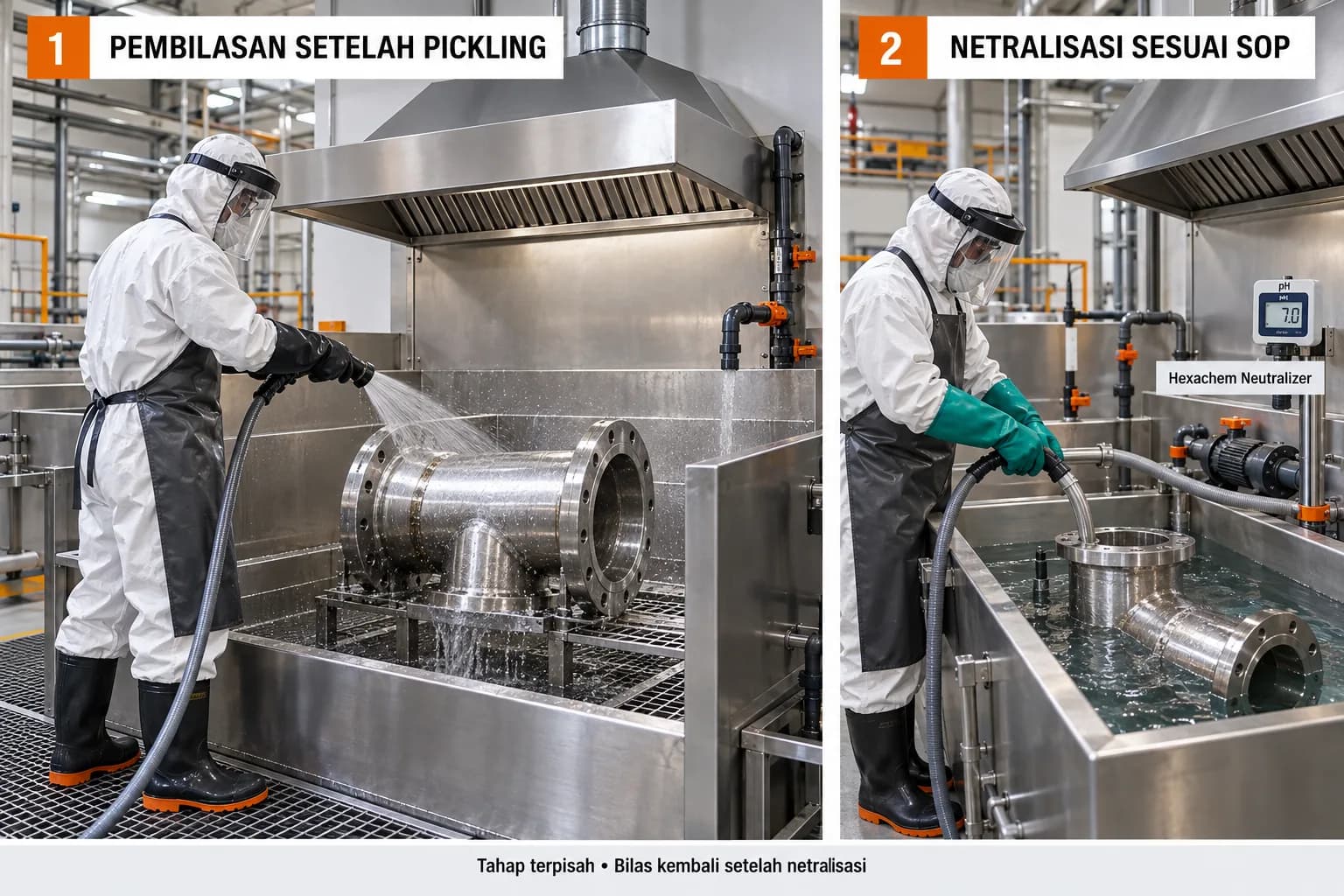
Rinsing is the main stage after pickling. Water has to reach every area the chemical touched, including gaps, the underside of components, threads, and joints. The goal is to lift the product, the reaction residue, and the contaminants that have detached. Acid left behind can cause corrosion, and HF residue in particular can trigger pitting. [2]
Use clean water and a rinsing method suited to the component shape. If pressure is used, control the splashing and mist and collect the rinse water. For high-cleanliness requirements, the quality of the final rinse water, including ion content and its tendency to leave marks, has to follow the job specification.
Inspection does not stop when the stain colour is gone. Make sure no gel, deposit, or liquid is still coming out of the gaps after draining. Comparing the pH of the final rinse water against the supply water can be a process indicator, but pH alone does not prove that all salts, fluoride, or other residue has gone. Additional criteria are set according to the component service requirements.
The role of Hexachem Neutralizer after the acid process
Hexachem Neutralizer is a concentrated alkali product for helping to deal with residual acidity and to control system pH. Its function is different from passivation. In a stainless steel chain, its use sits as a separate stage after the initial rinse, where a validated procedure requires it. After neutralisation, rinse again before the next stage.
For systems after acid descaling, the Neutralizer range is 1-5% in water with 1-2 hours of circulation or as conditions require, and a system pH target of 6-8. Those figures do not automatically become a recipe for every stainless component after gel or liquid pickling: the percentage basis and the job-specific parameters must be confirmed in the SOP.
Do not pour concentrated Neutralizer straight onto the gel layer or the pickling solution on the workpiece. The pickling products must not be mixed directly with alkali. A controlled neutralisation process needs stage separation, dosage setting, monitoring, and rinsing. Residual alkali also has to be removed so it is not carried into the passivation solution.
Surface neutralisation has to be distinguished from waste treatment. Spent solution and rinse water are collected and handled through a suitable treatment system. Moving waste pH into a certain range alone does not prove the waste meets all discharge requirements; dissolved metals and other chemical components still have to be assessed.
Passivation with Hexachem Stainless Steel Passivating Agent
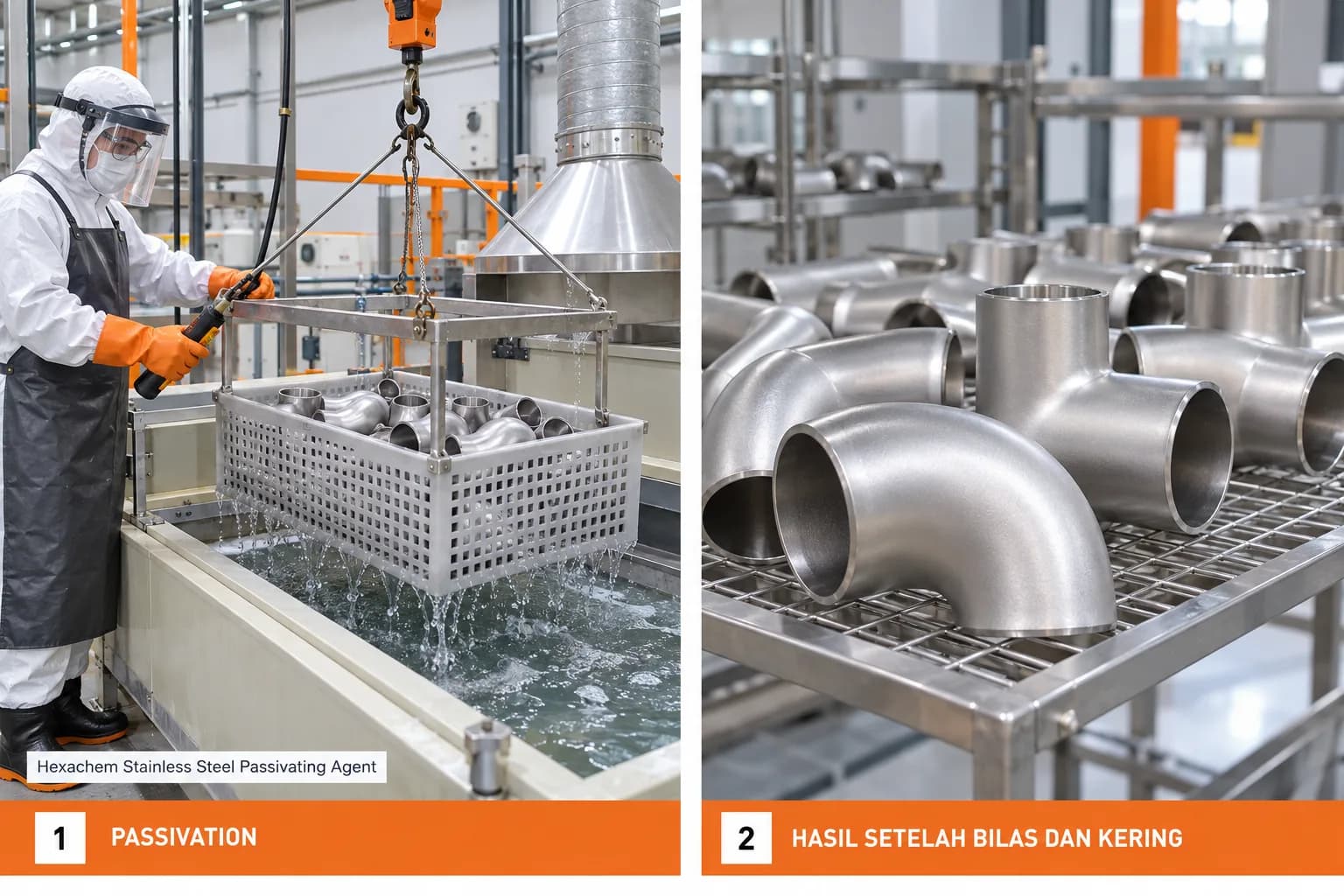
Passivation is a treatment intended to obtain a surface free of certain contamination and to support the formation of the passive layer. On stainless steel that has been pickled and rinsed properly, the passive layer can re-form naturally. Additional chemical treatment is used where a specification requires it, where quality control needs it, or where application evaluation calls for it. [1, 2]
Hexachem Stainless Steel Passivating Agent is intended for treatment after pickling or mechanical cleaning. Before application, make sure the surface is free of oil, scale that has not lifted, pickling residue, and alkali residue. Passivation does not replace pickling where oxide scale or heat tint still has to be removed.
For immersion, use a 5-10% volume concentration with a contact time of 10-30 minutes, according to application validation results. The solution must contact the whole treated surface. Afterwards, rinse thoroughly with clean water and dry with a lint-free cloth or clean air drying.
For spray application, apply the solution evenly and use a lint-free cloth to help spread it, with a contact time of 10-30 minutes depending on the application condition. The spray solution concentration has to be set with our technical team based on the job requirement; do not assume it matches the immersion concentration.
Passivation success has to be judged against the process conditions and the agreed acceptance criteria. Choosing the right chemistry alone is not enough to guarantee the result. Material grade, initial cleanliness, concentration, time, temperature, rinsing, and final testing all need to go into the job documentation.
Drying and final inspection
After the final rinse, drain the components and dry them without carrying oil, dust, or fibres onto the surface. Use clean handling equipment and a clean storage place. Avoid renewed contact with carbon steel swarf or dirty fabrication equipment.
Visual inspection covers remaining heat tint, scale, gel residue, rinse marks, and any sign of excessive etching. For precision or decorative components, add dimensional or finish inspection where required. On jobs that call for passivation, run the acceptance test appropriate to the material grade and the agreed standard: a clean appearance does not automatically prove that passivation succeeded.
Record the component identity, the products and batches used, the concentration where diluted, the contact time, the process conditions, and the inspection results. Those records help keep results consistent and help trace the cause if staining or corrosion is found after the job is finished.
Example application flows in the field
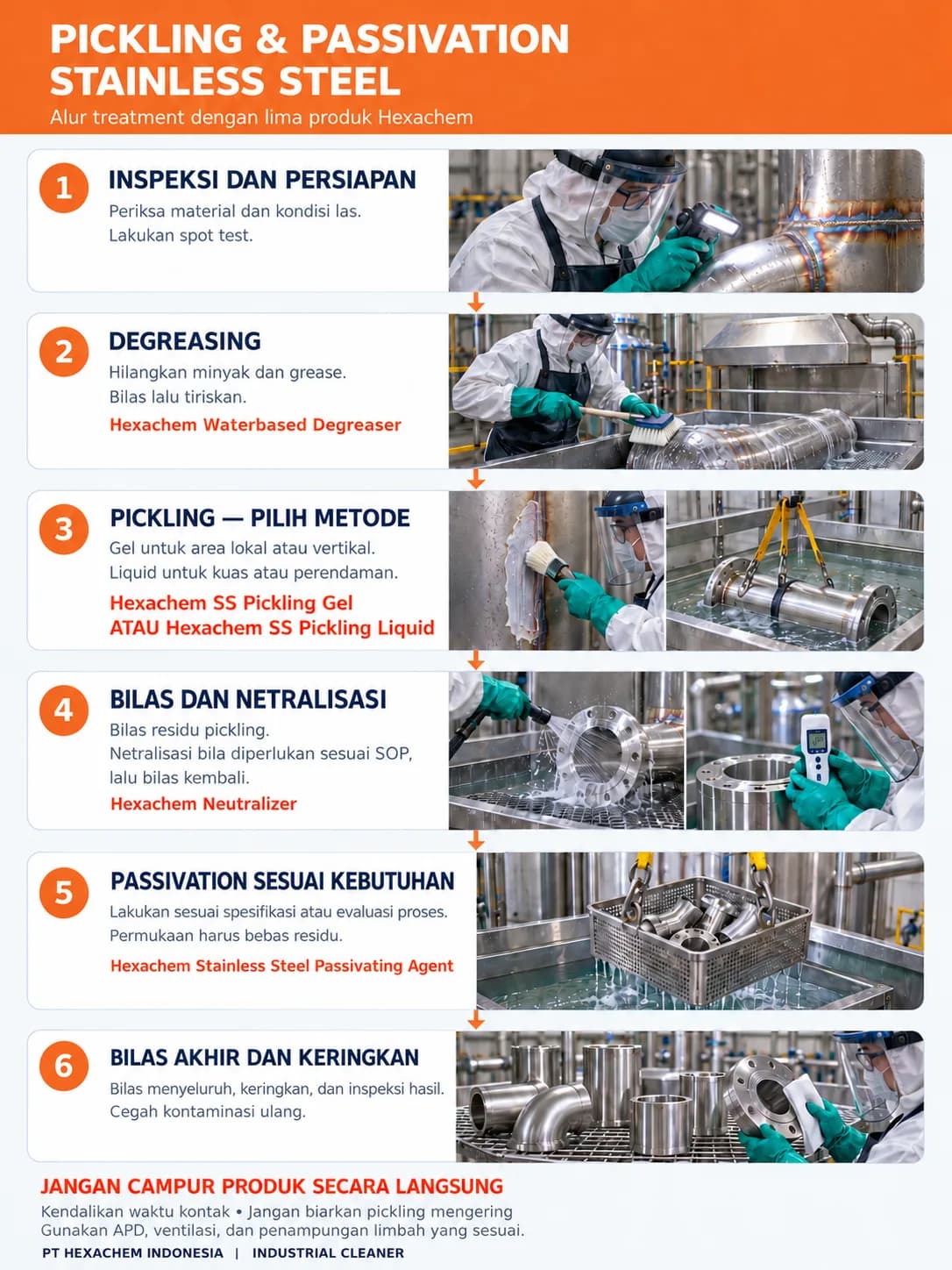
These two examples show where the five products sit in a single treatment system. Stage selection follows the component condition and the job specification, and inter-stage rinsing stays necessary to reduce carry-over and keep control of the chemical reactions.
Local treatment on a weld bead: start with inspection and a spot test. Clean the oil with Waterbased Degreaser if needed, then rinse and drain. Apply Pickling Gel to the weld bead and the affected areas, watch the reaction, then rinse thoroughly. If the SOP calls for neutralisation, use Neutralizer as a separate stage and rinse again. Continue with Stainless Steel Passivating Agent if required, then do the final rinse, dry, and inspect.
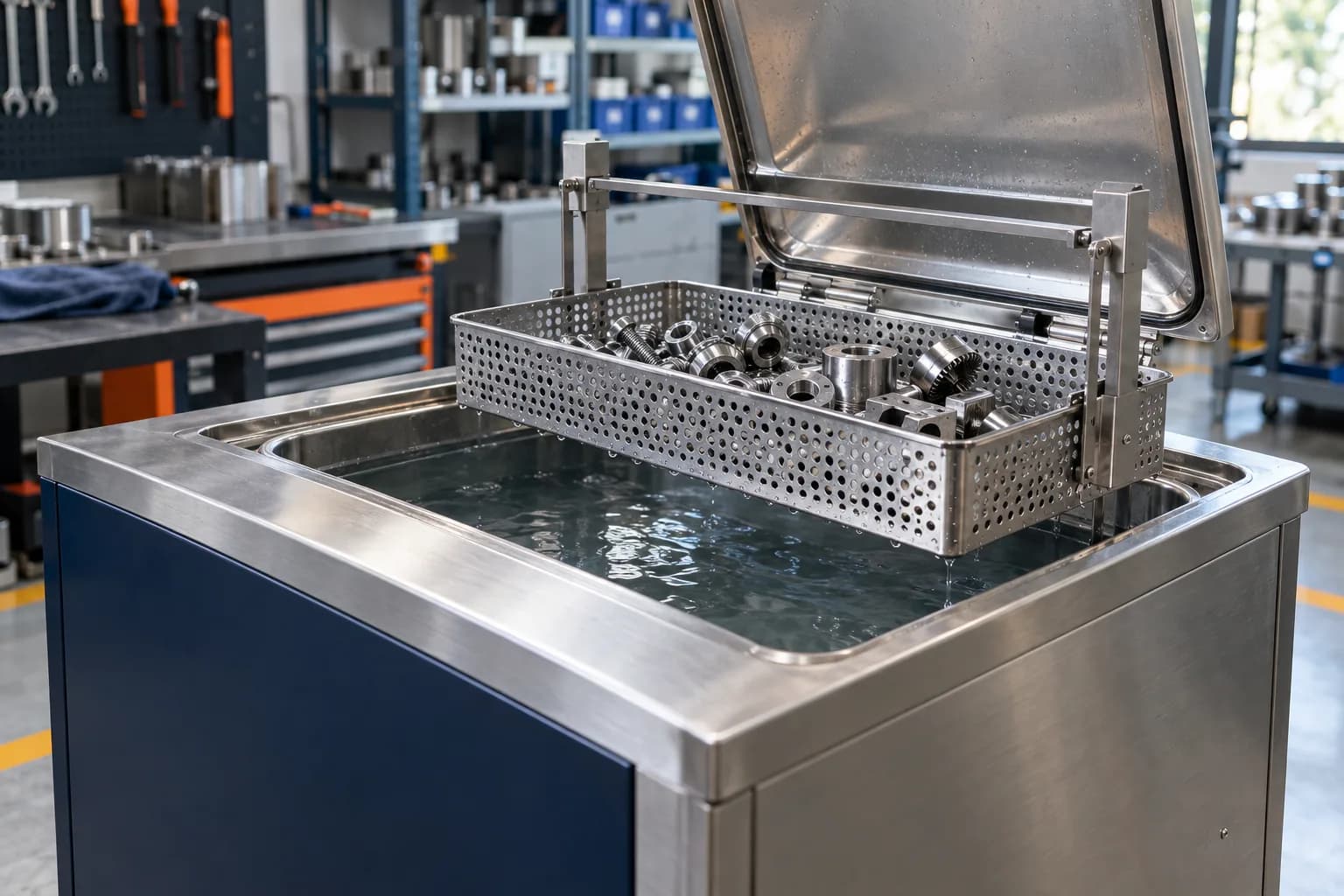
Immersion treatment of components: carry out inspection and degreasing, then rinse before the components go into the Pickling Liquid tank. Use tested immersion parameters and inspect the result periodically. Drain and rinse, do a separate neutralisation stage if that is specified, then rinse again. Where needed, passivate using working solution at the application parameters and the validated SOP. Finish with rinsing, drying, and inspection.
Mistakes to avoid
| Mistake | Effect on the result |
|---|---|
| Pickling an oily surface | Wetting and the reaction can end up uneven. |
| Letting the product dry out | Residue becomes harder to clean and the finish can be impaired. |
| Extending contact without inspection | Raises the risk of over-pickling and dimensional change. |
| Rinsing only the areas you can see | Solution can stay trapped in gaps or on the underside. |
| Equating neutralisation with passivation | A pH target does not prove the passive condition of the surface. |
| Carrying alkali residue into passivation | Changes the solution condition and process consistency. |
| Judging the result from gloss alone | Contamination or residue can still be present even when the surface looks clean. |
Safety and technical references
Pickling products are intended for industrial use by trained personnel. Pickling Liquid contains HF, which requires specific exposure control and immediate medical response in the event of exposure. Use PPE compatible with the chemicals, adequate local ventilation, emergency rinse facilities, and emergency response procedures based on the current SDS. Controls are still needed during rinsing, because the rinse water can contain hazardous chemicals.
Each product's SDS is the basis for handling, storage, PPE, and first aid. This article builds process understanding and product selection; the final operating parameters are set through the SOP, compatibility testing, risk assessment, and customer requirements. Spent solution and rinses must be collected and managed through an appropriate waste procedure.
ASTM A380/A380M gives guidance on cleaning, descaling, pickling, and passivation of stainless steel, while ASTM A967/A967M covers chemical passivation treatment and result verification. Claims of conformity have to be supported by relevant methods, parameters, and testing; naming a standard or using a product does not by itself prove process compliance. [4, 5]
Choosing the product chain for your needs
Hexachem offers product options for the preparation, pickling, neutralisation, and passivation stages. Waterbased Degreaser supports the initial cleaning; Pickling Gel and Pickling Liquid are chosen according to the area and the working method; Neutralizer and Stainless Steel Passivating Agent complete the treatment as the process requires.
Send us the grade, the surface condition, and the acceptance standard
To work out the right chain, send our technical team the stainless grade, photos of the surface condition, the type of contaminant, the component size and shape, the application method available to you, and the result standard you expect. That information helps with product selection and planning application trials before full execution.
External technical references
[1] Outokumpu. Post-fabrication treatment. https://www.outokumpu.com/en/expertise/stainless-basics/post-fabrication-treatment
[2] Australian Stainless Steel Development Association. Pickling and Passivation. https://www.assda.asn.au/stainless-steel/surface-finishes/pickling-and-passivation
[3] worldstainless. Surface treatment. https://worldstainless.org/about-stainless/process-and-production/surface-treatment/
[4] ASTM International. A380/A380M-25. Catalogue page and standard scope. https://store.astm.org/a0380_a0380m-25.html
[5] ASTM International. A967/A967M-25. Catalogue page and standard scope. https://store.astm.org/a0967_a0967m-25.html